

Slang for mustache is more fun than the plain old word “mustache.” People use nicknames like “flavor saver,” “soup strainer,” and “lip sweater” every day, in memes, barbershops, and casual talk.
This guide covers 17 popular slang terms, where each one comes from, and how to use them the right way without sounding forced.
By the end of this guide, you will know exactly which mustache slang fits which vibe, which ones belong in casual chat, and which ones to avoid in formal writing. We also compare how different generations talk about mustaches in 2026.
Quick Reference Table
Looking for a fast answer on slang for mustache? This table gives you the top terms at a glance, so you don’t have to scroll through the whole article to find a quick meaning.
Use this table before you read the full list below. It works great for quick scanning on mobile, and it also helps AI tools and search engines pull a fast, clear answer.
| Slang Term | Simple Meaning | Common Use | Popularity Level |
| Flavor Saver | Small mustache above the lip | Casual, funny | High |
| Soup Strainer | Thick, full mustache | Old-school humor | Medium |
| Lip Sweater | Any visible mustache | Playful teasing | Medium |
| Cookie Duster | Mustache that catches crumbs | Light joke | Low |
| Mo | Short form of mustache | Movember culture | Very High |
| Handlebar | Curled-up mustache tips | Vintage style | High |
| Chevron | Thick, rectangular mustache | Classic look | Medium |
| Pencil Stache | Thin, neat line mustache | Formal style | Medium |
| Stache | General short slang | Everyday talk | Very High |
Each term in this table also appears with a full explanation later in the article. This makes it easy to jump between the quick answer and the detailed version whenever you need more context.
Notice that popularity level varies a lot between terms. “Mo” and “stache” sit at the top because they show up across generations and regions, while niche terms like “cookie duster” stay more limited to casual jokes among close friends.
17 Popular Slang Terms for Mustache
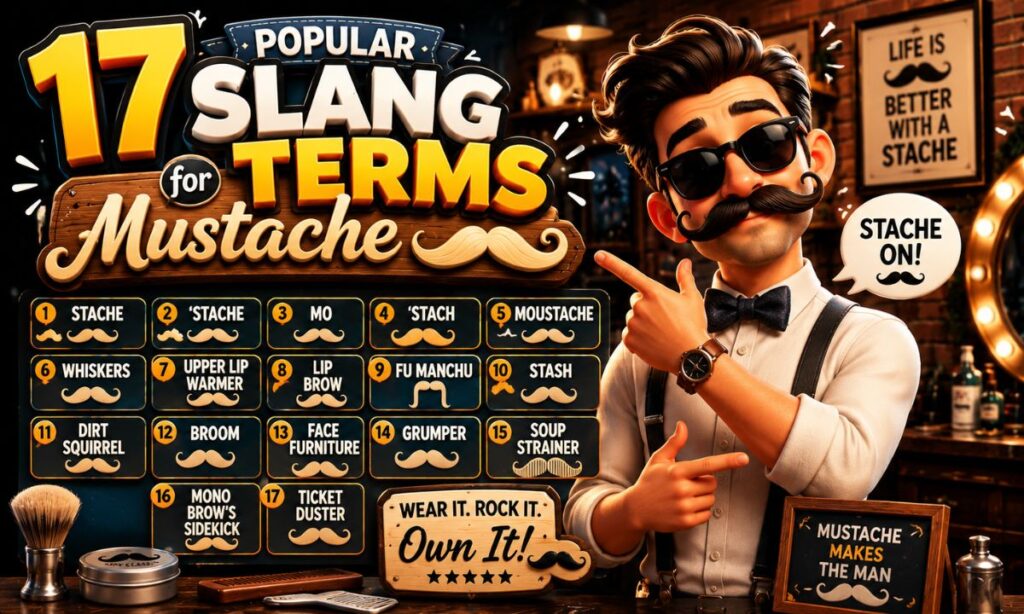
Every slang for mustache has its own story. Some come from old barbershop talk, passed down for decades. Others started as internet jokes and simply stuck around in daily conversation.
Here is the full list of 17 slang terms for mustache people actually use in 2026. Each one includes a quick explanation, so you know exactly when and how to use it in a sentence.
- Flavor Saver – A small strip of hair above the lip that jokingly “saves” bits of food for later. Often used in a teasing, friendly way.
- Soup Strainer – A thick mustache said to strain soup before it reaches the mouth. This is one of the oldest slang terms still in use.
- Lip Sweater – A casual, funny name for any visible facial hair on the upper lip. Works well in light conversation.
- Cookie Duster – Used when a mustache looks like it might collect crumbs or dust from snacks. A gentle, harmless joke.
- Mo – Short and simple, made popular during Movember, the annual mustache-growing awareness campaign each November.
- Handlebar – A mustache with curled, upturned ends, similar in shape to bicycle handlebars. Common in vintage and steampunk style.
- Chevron – A thick, straight, rectangular mustache shaped like a chevron stripe. A classic, no-fuss look.
- Pencil Stache – A thin, precise line mustache, often trimmed for a neat, formal appearance.
- Horseshoe – A mustache that drops down at both corners of the mouth, forming a shape like an upside-down horseshoe.
- Walrus – A bushy, wide mustache that fully covers the upper lip, named after the walrus animal’s whiskers.
- Fu Manchu – A long, thin mustache that extends down past the corners of the mouth and jawline.
- Toothbrush – A short, thick mustache centered directly under the nose, kept narrow on both sides.
- English Mustache – Thin and long, with pointed, waxed tips that curl slightly upward.
- Dali – A thin, dramatically upward-curled mustache, named after the artist Salvador Dali.
- Nose Neighbor – A playful slang term for a mustache that sits right below the nose.
- Face Fuzz – A general slang term for early-stage or light, patchy facial hair before it fully grows in.
- Stache – The most common short form used everywhere today, in texts, captions, and daily conversation.
Generational Slang Comparison
Not every generation uses the same slang for mustache. Older terms feel nostalgic and descriptive, while newer slang for mustache feels casual, short, and quick to type.
This table breaks down which slang for mustache each age group tends to prefer. It helps you pick the right word for the right audience, whether you’re writing for a blog, a caption, or a casual chat.
| Generation | Preferred Slang | Style | Where It’s Used |
| Gen Z | Stache, Mo | Short, casual | Social media, texting |
| Millennials | Flavor Saver, Lip Sweater | Playful, meme-friendly | Memes, group chats |
| Gen X | Handlebar, Chevron | Style-focused | Grooming forums, blogs |
| Boomers | Soup Strainer, Toothbrush | Classic, descriptive | Everyday conversation |
Gen Z tends to favor speed and simplicity, so short slang like “stache” fits their fast-paced online communication. Millennials grew up with meme culture, which explains their love for funnier, more visual terms like “flavor saver.”
Gen X and Boomers, on the other hand, often use slang tied to specific mustache shapes or textures. This reflects a generation that grew up talking about grooming and style in more descriptive, hands-on ways.
Social media has also sped up how new slang spreads between generations. A term that starts as a Gen Z joke on video apps can reach Millennials within weeks, while older, more descriptive slang tends to stay within barbershop and grooming communities for much longer.
How to Use Slang Naturally Without Sounding Awkward
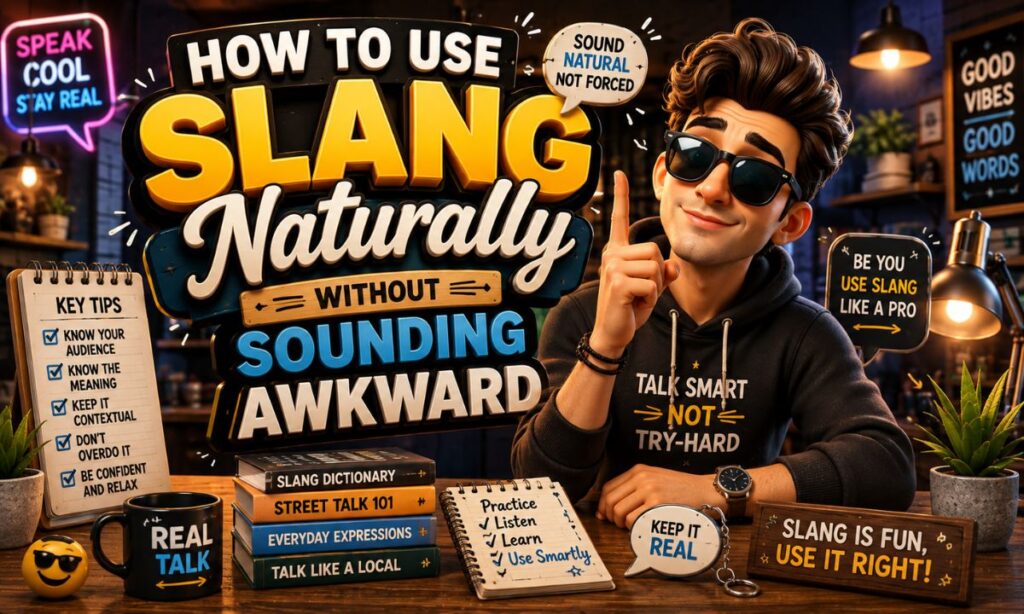
Slang for mustache works best in casual, relaxed conversation. Using it in the wrong setting, like a job interview or formal report, can feel forced or out of place.
Keep the tone light and match the slang for mustache to the moment you’re in. Here are simple, practical tips to help you sound natural every time you use mustache slang.
- Use “stache” in everyday conversation, since it feels the most natural and widely understood.
- Save “flavor saver” for jokes among friends or lighthearted social posts.
- Avoid slang entirely in formal writing, resumes, or professional emails.
- Match the slang to the mustache style, like using “handlebar” only for curled, waxed tips.
- Listen to how others use a term before trying it yourself in conversation.
- Pair slang with a smile or light tone so it clearly reads as playful, not rude.
These small habits make a big difference. Slang that fits the mood always sounds more natural than slang that’s forced into a serious conversation.
It also helps to think of mustache slang the same way you’d think of any other nickname. You wouldn’t call a stranger by a nickname on the first meeting, and the same logic applies here: save the playful terms for people you already joke around with.
Common Slang Mistakes
People often mix up slang for mustache terms or use them in the wrong context. This can make a joke fall flat, confuse the listener, or even sound a little rude by accident.
Below are the most common mistakes people make when using mustache slang. Fixing these small errors makes your speech and writing sound far more natural.
- Calling every mustache a “walrus” even when it’s actually thin or neatly trimmed.
- Using “soup strainer” for a clean, pencil-thin mustache, which doesn’t match the term’s meaning.
- Mixing up “handlebar” with “horseshoe,” even though the shapes are quite different.
- Overusing slang in serious, professional, or customer-facing settings.
- Forgetting that some terms, like “Fu Manchu,” refer to one very specific shape, not just any long mustache.
- Using outdated slang with younger audiences who may not recognize the term at all.
Avoiding these mistakes helps you sound informed and confident, whether you’re writing a blog post or just chatting with friends about grooming styles.
A simple rule of thumb: if you’re not fully sure a term fits, describe the mustache in plain words first, then add the slang afterward as a light comment. This way, even if the slang is slightly off, your main point still comes across clearly.
Practice Section
Practice helps slang for mustache stick in your memory much faster than just reading a list. Try matching each term to the correct mustache style described below.
This short slang for mustache exercise builds confidence quickly. Read the term, picture the style in your mind, then check your answer against the description.
Match the slang to the style:
- Handlebar → curled, upturned tips.
- Walrus → thick, wide, and covers the lip fully.
- Pencil Stache → thin, neat, and precisely trimmed.
- Horseshoe → drops down at both corners of the mouth.
- Toothbrush → short, thick, and centered under the nose.
- Chevron → straight, rectangular, and thick all the way across.
Try saying each term out loud in a full sentence. For example: “He grew a full walrus mustache for winter,” or “She joked about his flavor saver at lunch.” Practicing with real sentences makes the slang feel more natural the next time you use it.
Unique Mustache Names Male
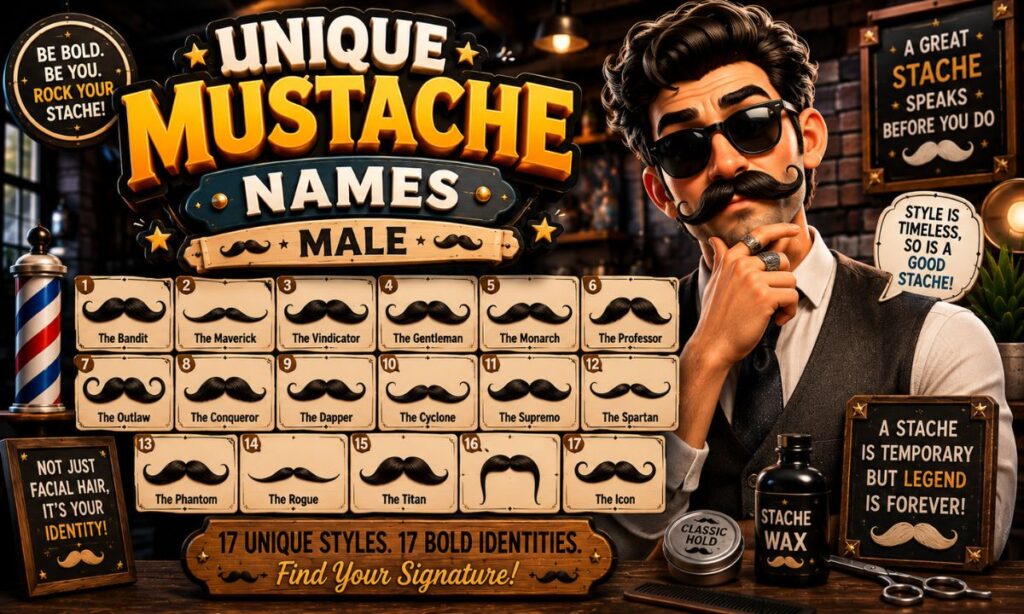
Men often look for unique slang for mustache names to describe their style online, in barbershop chats, or on social media. These names add personality and confidence to a simple grooming choice.
Here are some unique slang for mustache names men use in 2026, mixing classic style words with a bit of modern flair and creativity.
- The Gentleman’s Stache
- Iron Lip
- The Rugged Ridge
- Old World Stache
- The Sharp Shadow
- Rustic Rider
- The Bold Brush
- Midnight Trim
- The Classic Curl
- Streetwise Stache
These names work well as captions, nicknames, or even branding for grooming products aimed at men who want a distinct, memorable mustache identity.
Slang for Mustache in English
Looking for slang for mustache in english specifically? It includes both American and British versions, and some words are used only in certain regions or age groups.
This section lists the most common English slang for mustache terms, so you know which ones travel well across countries and which ones stay more regional.
- Stache – Universal, used casually across the US, UK, and Australia.
- Mo – Especially popular in the UK and Australia, tied closely to Movember.
- Lip Sweater – Mostly American slang, common in casual conversation.
- Soup Strainer – Common in older British English, though still understood widely.
- Flavor Saver – Widely used across North America in casual and online talk.
- Tash – A shortened British spelling variation of “stache,” used informally.
Knowing which region a slang term comes from helps you use it more naturally, especially if you’re writing content for a specific audience, like readers in the USA.
For US-based readers, sticking with “stache,” “flavor saver,” and “lip sweater” tends to feel the most familiar and natural. British terms like “tash” or “mo” can still be understood, but they carry a slightly more regional, imported feel in American conversation.
What is the Meaning of Moustache
Before diving into slang for mustache, it helps to know where the word itself comes from. “Moustache” comes from the French language, meaning hair that grows above the upper lip. It is the standard spelling in British English, while “mustache” is the common American spelling.
Both spellings mean the exact same thing and describe the same facial feature. The only real difference is regional spelling preference, not meaning, style, or grooming technique.
In simple terms, a moustache or moustache is facial hair grown and trimmed above the upper lip, separate from a beard or sideburns. People shape it into many styles, from thin pencil lines to thick, bushy looks.
Historically, the mustache has carried different meanings across cultures, from a symbol of maturity and status to a simple personal style choice. Today, it’s mostly seen as a grooming preference, with slang terms adding a layer of humor and personality on top of the basic meaning.
Funny Mustache Names Male
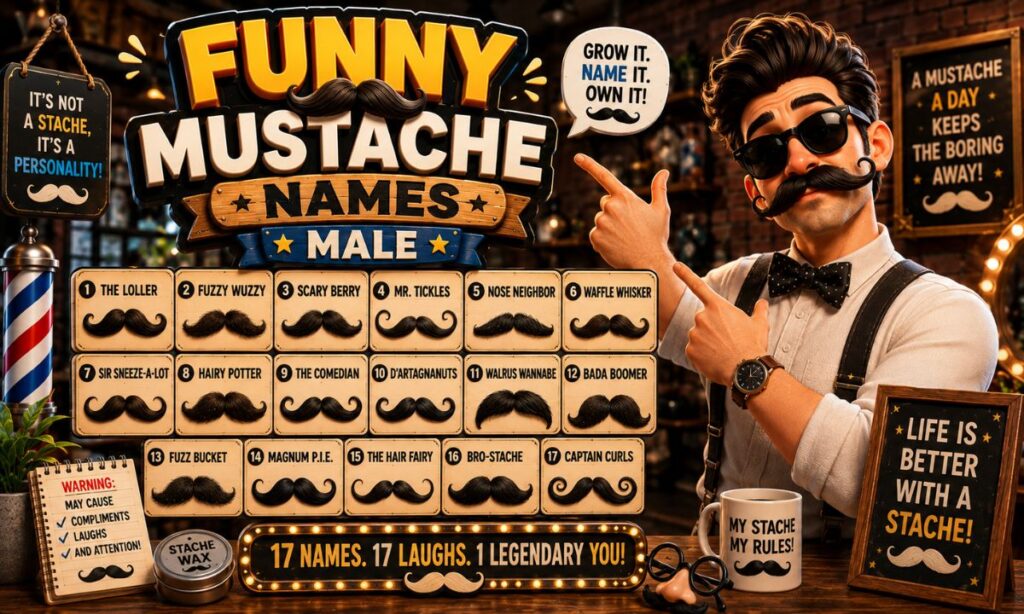
Funny slang for mustache adds humor and lightness to grooming talk. Men often use these playful terms to describe their mustache in a fun, self-aware way, especially online.
Here are some of the funniest slang for mustache names used by men today, perfect for captions, jokes, or casual conversation.
- Crumb Catcher
- Sneeze Guard
- Face Broom
- Nose Neighbor
- Lip Rug
- The Tickler
- Cereal Strainer
- Snack Trap
- The Nostril Guard
- Whisker Wall
These funny names are meant purely for humor and light teasing between friends. They work best in casual settings, like social captions or friendly banter, rather than formal descriptions.
If you’re writing captions or short posts, pairing a funny mustache name with a real photo tends to perform well, since the humor lands faster when readers can see the exact style being joked about.
Frequently Asked Questions
What is the most common slang for mustache?
“Stache” is the most common slang for mustache used today. It is short, casual, and works naturally in almost any conversation or caption.
Is “flavor saver” a real slang term?
Yes, “flavor saver” is a real and widely used slang term. It jokingly refers to food or crumbs getting caught in the mustache during meals.
Which slang terms are popular with Gen Z?
Gen Z mostly uses short terms like “stache” and “mo.” These fit quick, casual conversations, texting, and social media captions perfectly.
Are mustache slang terms offensive?
Most mustache slang terms are harmless and used purely in fun. A few older terms can sound outdated or unfamiliar to younger audiences, so context matters.
Can slang be used in professional writing?
No, slang for mustache should be avoided in professional or formal writing. Stick to the standard word “mustache” in resumes, reports, or business content.
Does mustache slang change over time?
Yes, mustache slang shifts naturally with each generation. New terms appear online through memes, while older ones slowly fade from everyday use.
Is “stache” acceptable in casual writing?
Yes, “stache” works well in blogs, texts, and social captions. It is friendly, short, and easy to understand for most modern readers.
Conclusion
Slang for mustache adds fun, humor, and personality to everyday conversation. From “flavor saver” to “soup strainer,” each term carries its own story, style, and generational flavor.
This guide covered 17 popular slang for mustache terms, a generational comparison, common mistakes to avoid, and even a quick practice section to help the words stick.
Use the right slang for the right moment, whether it’s a joke with friends, a caption online, or a description of your own grooming style. Try out a few terms from this guide the next time facial hair comes up in conversation, and share your favorite mustache slang with someone who’d get a laugh out of it.