
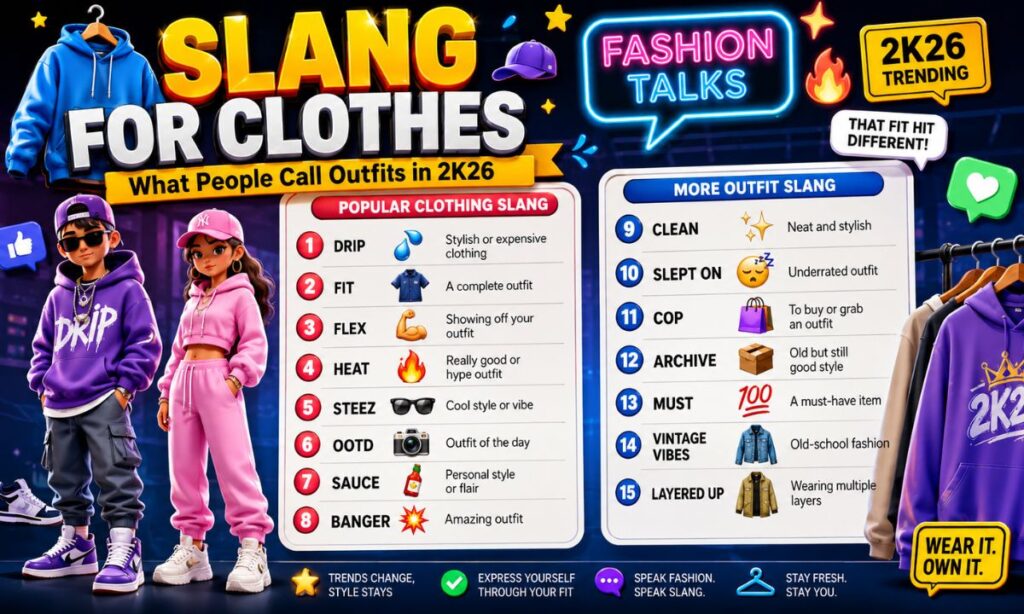

Slang for clothes in 2K26 centers on fit, drip, and newer terms like Muja fit. These words describe an outfit’s style, confidence, and mood in one phrase.
Gen Z leans on video-driven terms, Millennials favor “swag” and “kicks,” and each generation’s slang reflects the platforms it grew up on.
Quick Answer
Slang for clothes refers to informal words — like fit, drip, fresh, and Muja fit — used to describe an outfit’s style instead of saying “clothes” or “dress.”
These terms come mainly from music, streetwear culture, and short-form video apps, and they change generation to generation, with new phrases often trending for only a few weeks before the next one takes over.
Why This Slang Spreads So Fast
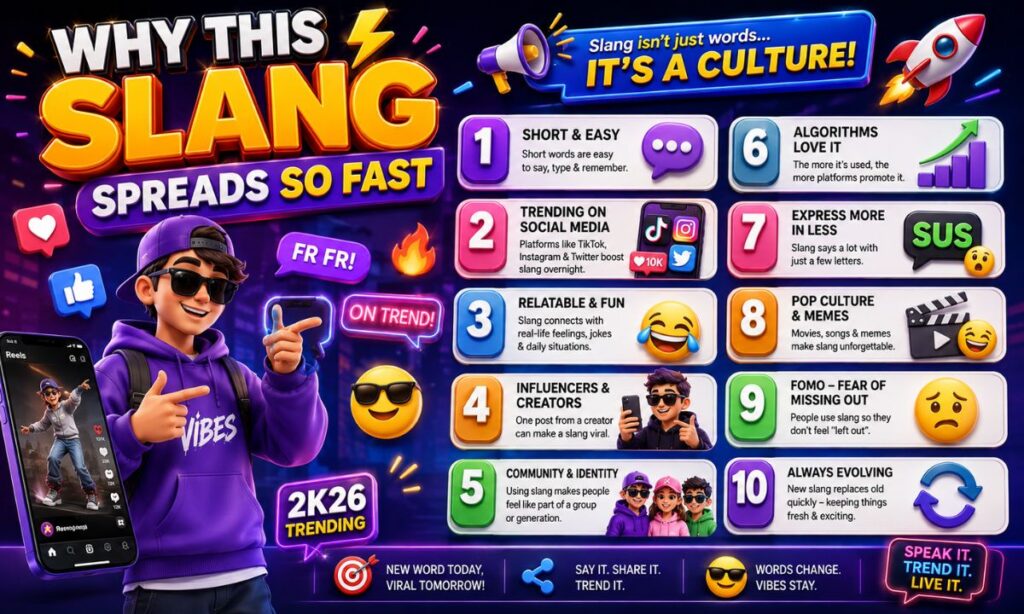
Clothing slang today travels through the same platforms Gen Z already lives on. <cite index=”4-1″>Industry survey data shows a large majority of Gen Z social media users are active on Facebook and Instagram, with strong numbers also on YouTube and TikTok</cite>, and <cite index=”4-1″>TikTok is consistently reported as Gen Z’s favorite channel for product discovery</cite>.
That combination — a style word tied to a product, pushed through a video app built for product discovery — is why a term like “Muja fit” can go from a single video to everyday slang in weeks rather than years.
<cite index=”3-1″>As of March 2025, Generation Z made up about 27 percent of the U.S. social media audience</cite>, and <cite index=”3-1″>their top activities are liking, commenting, and sending private messages rather than passively scrolling</cite> — which is exactly the kind of active engagement that turns a slang term into a shared in-joke instead of a one-off caption.
Quick Reference Table
Slang for clothes changes often, so a simple cheat sheet helps. Use this table to learn the basics fast.
| Slang Term | Meaning | Example Use |
| Fit | An outfit | “That fit is clean.” |
| Drip | Stylish clothing | “His drip is unmatched.” |
| Muja fit | A trendy, confident outfit | “New Muja fit today.” |
| Muja drip | Fresh, eye-catching style | “That Muja drip is fire.” |
| Fire | Extremely good-looking clothes | “These shoes are fire.” |
| Clean | Neat, sharp style | “Keep it clean and simple.” |
| Fresh | New, well-put-together look | “Fresh kicks, fresh fit.” |
| Fit check | Sharing your outfit for feedback | “Doing a quick fit check.” |
This table works well as a snapshot for readers who want quick answers before reading more.
30 Slang Terms for Clothes
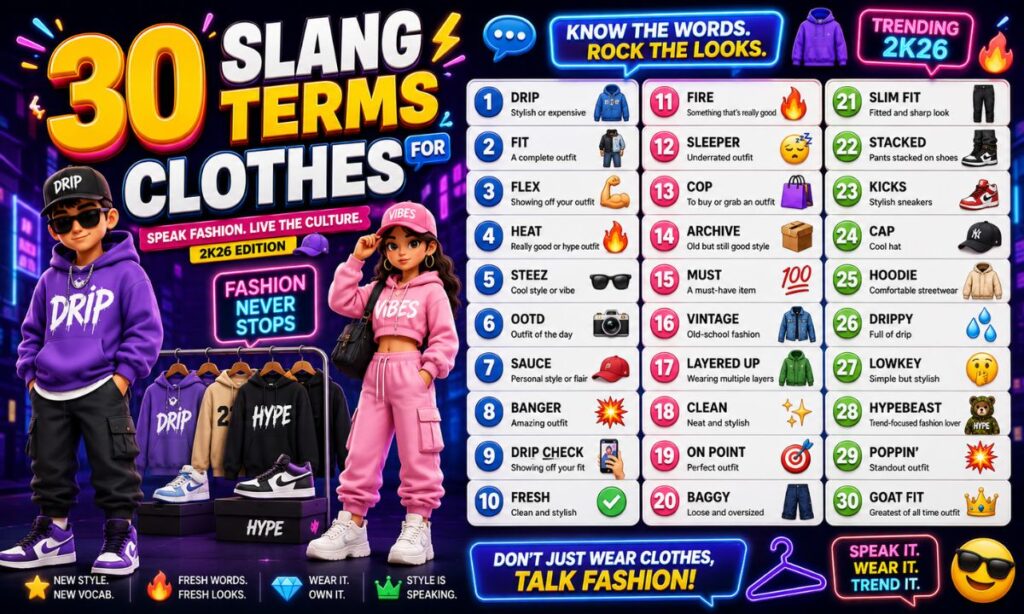
Clothing slang comes from music, sports, and online trends. Below are 30 popular terms used in 2K26, with short meanings.
| Term | Meaning | |
| Fit | Outfit | |
| Drip | Stylish clothes | |
| Muja fit | Confident, trendy outfit | |
| Muja drip | Eye-catching style | |
| Muja check karo | Casual way to say “check the outfit” | |
| Fire | Amazing clothing | |
| Clean | Sharp and tidy look | |
| Fresh | New or stylish | |
| Swag | Confident personal style | |
| Kicks | Sneakers | |
| Ice | Jewelry paired with an outfit | |
| Sauce | Unique personal style | |
| Aesthetic | A specific visual style theme | |
| Thrifted | Secondhand clothing | |
| Core | A style category, like cottagecore | |
| Slay | Looking amazing | |
| On point | Perfectly styled | |
| Coordinated | Matching outfit pieces | |
| Oversized | Loose-fitting clothing | |
| Baggy | Extra loose pants or tops | |
| Comfy | Relaxed, casual clothing | |
| Flex | Showing off an outfit | |
| Sneakerhead | Someone obsessed with sneakers | |
| Monochrome | One-color outfit | |
| Quiet luxury | Understated, expensive style | |
| Y2K | Early 2000s fashion revival | |
| Cyber fit | Futuristic, tech-inspired outfit | |
| Drippy | Very stylish | |
| Iced out | Loaded with jewelry | |
| Fresh to death | Extremely well-dressed |
This list shows how slang for clothes blends comfort, confidence, and identity into a few words.
Generational Slang Comparison
Every generation names clothing differently. Comparing them shows how fast slang for clothes keeps changing.
| Generation | Popular Slang | Meaning | Where It Spread |
| Boomers | Threads | Clothes in general | Radio, print, word of mouth |
| Gen X | Gear | Casual or sporty clothing | TV, magazines |
| Millennials | Swag, kicks | Stylish clothes and shoes | Early internet, hip-hop culture |
| Gen Z | Fit, drip, aesthetic | Trendy, personalized style | TikTok, Instagram Reels, YouTube |
| 2K26 Youth | Muja fit, Muja drip | Confident, viral-ready outfits | Short-form video, group chats |
Older slang often lasted for years. Newer slang, like Muja fit, can trend within weeks because of short-form video content.
Which Slang Term Should You Use? (Decision Guide)
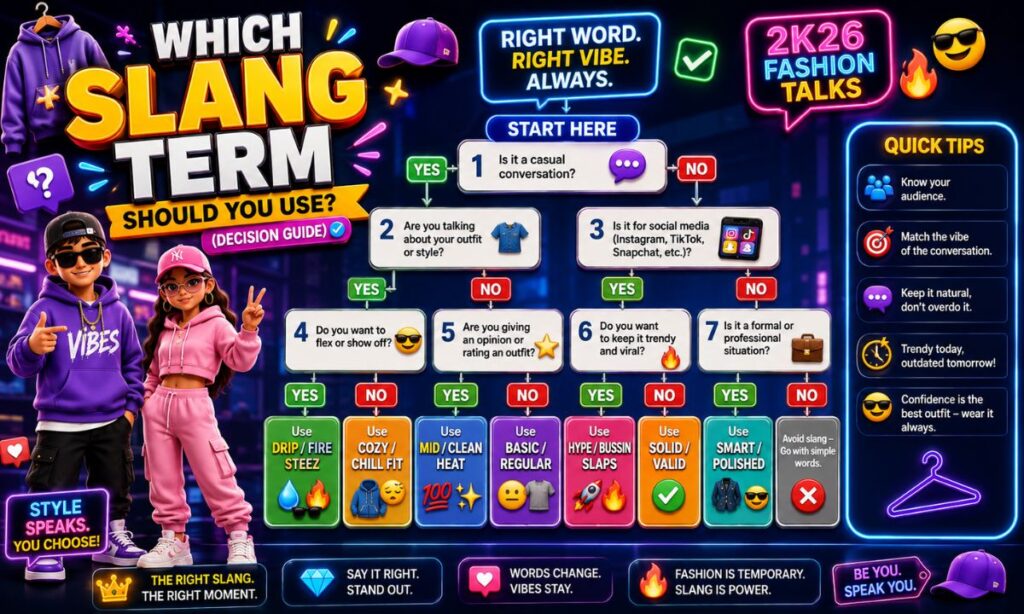
Not every slang word fits every situation. Use this table to decide which term matches your context.
| If you want to… | Use this term | Avoid |
| Describe a full outfit casually | Fit | Threads, gear (sound dated) |
| Compliment sharp, expensive-looking style | Drip / Quiet luxury | Fire (too generic) |
| Ask someone to share their outfit | “Do a fit check” | “Show me your clothes” (sounds formal) |
| Describe jewelry with an outfit | Ice / Iced out | Flex (means something broader) |
| Talk about a secondhand outfit | Thrifted fit | Fresh (implies brand new) |
| Write for a professional or formal audience | Plain English (“outfit,” “style”) | Any slang term |
How to Use Slang Naturally Without Sounding Awkward
Using slang for clothes correctly takes a little practice. Forced slang usually feels off in conversation.
Match the Context
Slang works best in casual settings. Use words like drip or Muja fit with friends, not in formal writing.
Formal emails and professional bios should avoid slang for clothes completely. Save it for texts, captions, and casual chats.
Don’t Overuse It
Repeating slang too often makes speech feel unnatural. One or two slang terms per sentence is usually enough.
Overloading a sentence with terms like fire, drip, and Muja fit at once can confuse the listener instead of impressing them.
Listen Before You Speak
New slang for clothes spreads through social media first. Watching how creators use a word helps you learn its tone and timing.
Reading captions and comments under fashion videos is one of the fastest ways to pick up current slang naturally.
Common Slang Mistakes
Small errors can make slang for clothes sound wrong or outdated. Avoid these common issues.
- Using old slang like “phat” in a 2K26 conversation
- Mixing slang from different cultures without understanding the meaning
- Overusing one term, like saying “fire” for everything
- Using slang in formal writing or job interviews
- Misusing Muja fit to describe something that isn’t clothing related
Small mistakes like these can make speech sound forced instead of natural.
Slang also changes meaning between regions. A word that means “stylish” in one city might sound odd or unclear in another.Always double-check a new slang term before using it publicly. A quick search or a scroll through recent posts usually confirms if it is still relevant.
Expert Insight
Language and social-media researchers who track youth slang generally agree on one pattern: a clothing term rarely survives more than a few months unless it attaches itself to a repeatable format — a challenge, a sound, or a caption style — that other creators can copy.
That’s the practical reason “fit check” outlasted many one-off terms: it isn’t just a word, it’s a template anyone can post. Brands trying to use slang for clothes in marketing should treat it the same way — borrow the format, not just the vocabulary, and expect to retire terms faster than a normal style guide would.
Practice Section
Practicing slang for clothes helps it feel natural in real conversation. Try these quick exercises.
- Describe your outfit today using one slang word from the list above.
- Rewrite this sentence with slang: “My shoes look very stylish today.”
- Use “Muja fit” correctly in a text message to a friend.
- Compare two outfits using generational slang, like “swag” versus “drip.”
- Do a mini fit check by describing your clothes in three slang words.
Repeating these small exercises builds confidence with new vocabulary quickly.
Try practicing with a friend who already uses slang for clothes naturally. Real conversation practice works better than memorizing a list alone.
Keep a small notebook or notes app with new terms you hear each week. Reviewing it often helps the words stick faster.
Millennial Slang for Clothes
Millennials grew up with early internet culture and hip-hop influence. Their clothing slang reflects that era clearly.Common millennial terms include swag, fresh, kicks, and ballin’. These words described confidence and status through clothing choices.
Millennials also used “ice” for jewelry and “gear” for casual streetwear. Many of these terms still appear in music and social media today.Brand names carried a lot of weight in millennial slang for clothes. Wearing recognizable logos was often part of looking “fresh” or “ballin’.”
This generation also popularized phrases tied to sneaker culture, which later influenced how younger generations describe their own outfits.
Gen Z Slang for Clothes
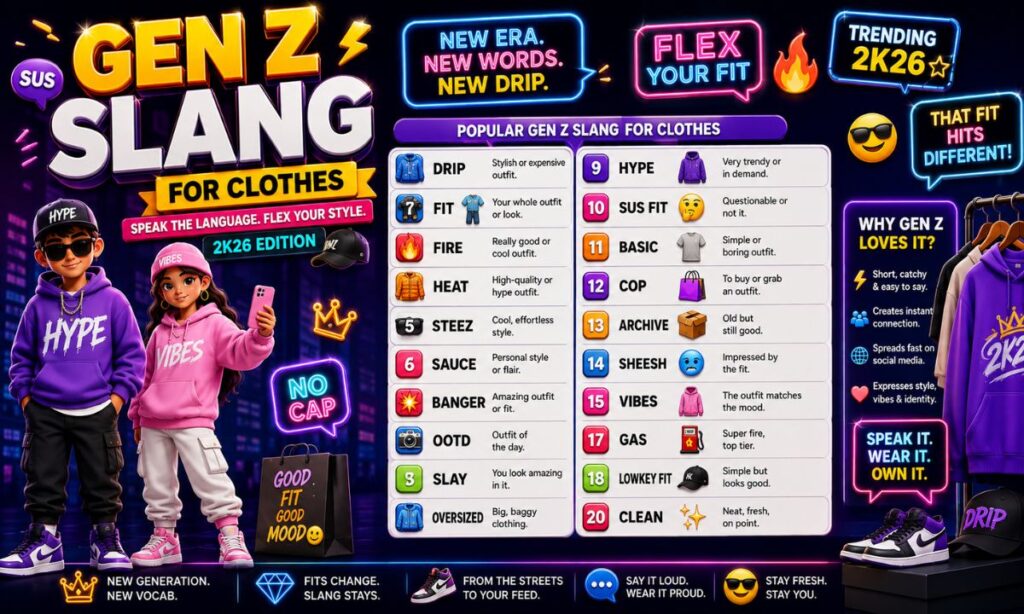
Gen Z slang for clothes focuses on personal identity and aesthetics. Words like fit, drip, and aesthetic dominate their vocabulary.Fit check became a viral trend where people share their daily outfits online for feedback and reactions.
Newer terms like Muja fit and Muja drip fit naturally into Gen Z conversations, blending confidence with a playful, trend-driven tone.Short-form video apps play a huge role in spreading Gen Z slang for clothes. A single video can turn a small phrase into a global trend within days.
Gen Z also mixes slang with humor, using terms ironically as often as sincerely when describing an outfit.
Urban Slang for Clothes
Urban slang for clothes often comes from street culture, music, and city fashion scenes. It values comfort, confidence, and originality.Popular urban terms include kicks, fresh, clean, and drip. These words highlight sneaker culture and everyday street style.
Muja drip fits naturally into urban slang, describing an outfit that stands out with confidence and a strong personal touch.City neighborhoods often create their own versions of the same word. This is why urban slang for clothes can sound slightly different depending on location.
Music videos and street interviews remain one of the biggest sources for new urban clothing slang each year.
Urban Slang for Fashionable
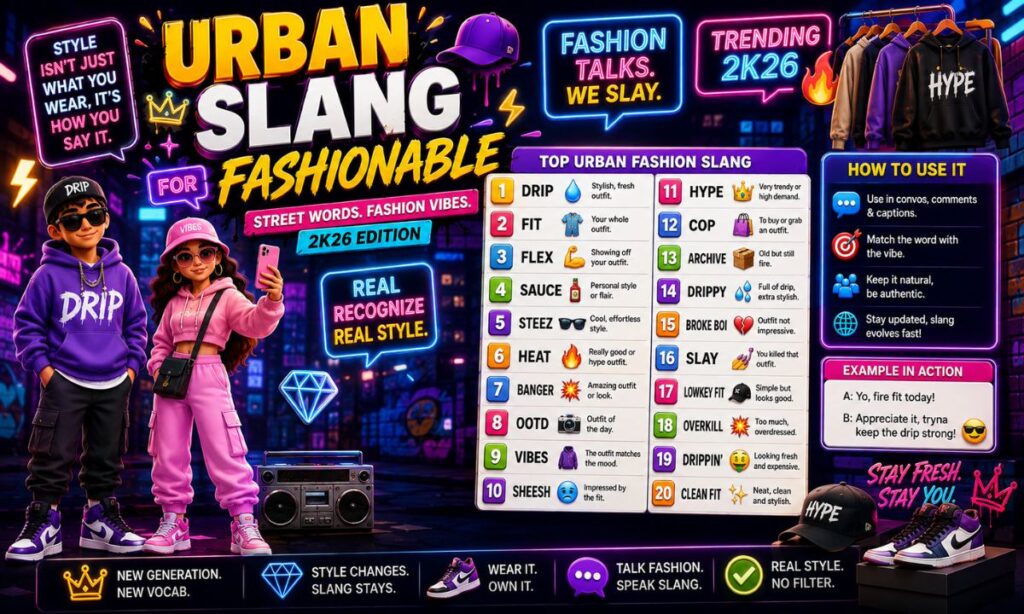
Being fashionable in urban slang means looking sharp, confident, and trend-aware. Several words capture this feeling perfectly.Terms like fire, clean, and drippy describe outfits that grab attention instantly. Iced out adds jewelry into the equation.
Muja fit also fits here, describing someone who looks fashionable and put-together without trying too hard.Confidence plays a big role in these terms. A fashionable look in urban slang is less about price and more about how an outfit is worn.
Combining a few of these words, like “clean drip” or “fresh and fire,” is common when describing a truly fashionable outfit.
Frequently Asked Questions
What is the most popular slang for clothes in 2026?
Fit and drip remain the most popular, alongside newer terms like Muja fit.
Is “drip” still trending?
Yes, drip is still widely used and remains popular across social media in 2K26.
What does “fit check” mean?
A fit check means sharing your outfit online for opinions or reactions.
Are clothing slang terms different in different countries?
Yes, slang for clothes varies by country, culture, and local trends.
Can slang be used in fashion blogs?
Yes, casual fashion blogs often use slang to sound relatable and current.
What does “Muja fit” mean?
Muja fit describes a confident, trendy outfit that stands out visually.
How do you use clothing slang in a sentence?
Keep it simple, like: “That Muja drip looks fire today.”
Conclusion
Slang for clothes keeps evolving every year, shaped by music, social media, and street culture. From classic terms like swag to newer ones like Muja fit, language around fashion always reflects the times.
Try using one new slang term from this guide today. Share your own fit check and see how the right words make your style stand out even more.