

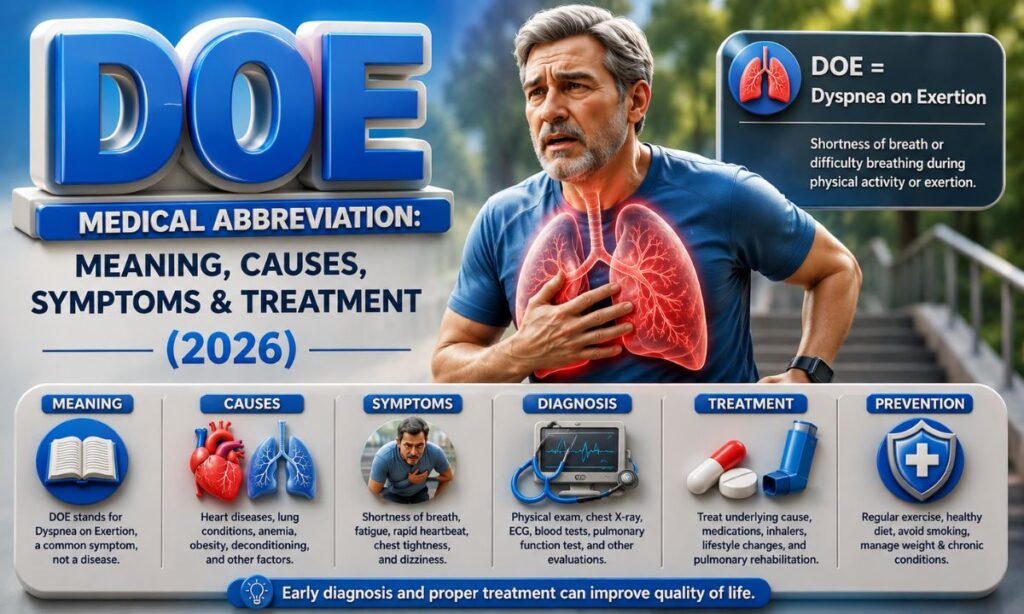

DOE medical abbreviation stands for “dyspnea on exertion,” and if you have seen it written on your chart, this guide explains exactly what it means. This short abbreviation shows up in doctor’s notes, hospital records, and lab reports all the time, yet most patients never get a clear explanation.
In simple words, DOE means feeling short of breath when you are active — walking, climbing stairs, or doing any physical task. It is one of the most common symptoms doctors track, especially in heart and lung conditions.
This article breaks down what DOE really means, why doctors care about it, what causes it, and how it is treated. By the end, you will understand exactly what your doctor means when they write DOE in your file.
What Does DOE Mean in Medical Terms?
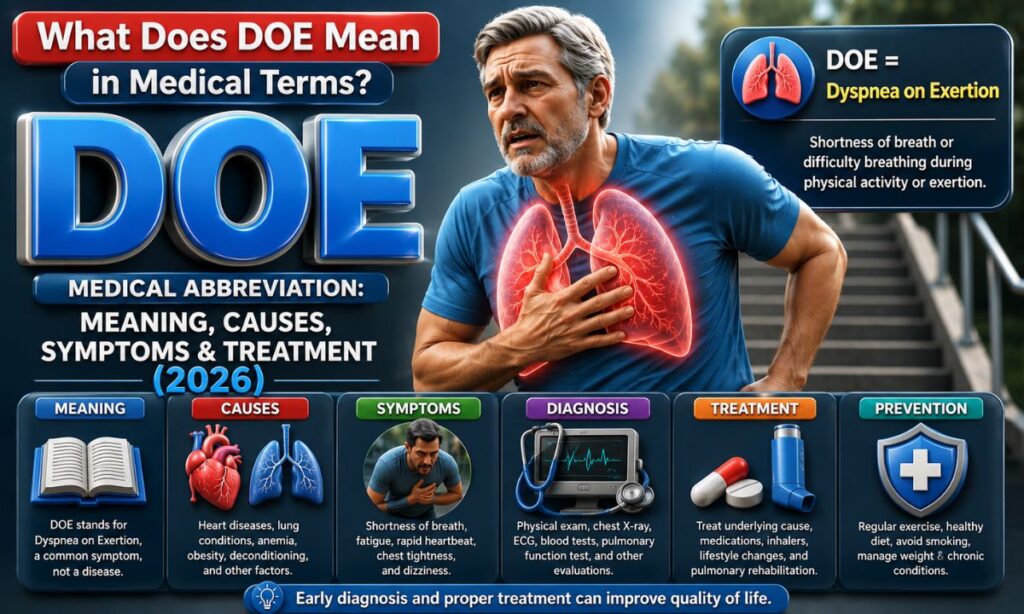
In medical terms, DOE means “dyspnea on exertion.” It describes breathlessness that appears or worsens during physical activity, rather than while resting.
Doctors use DOE as shorthand because it is faster to write and instantly understood across specialties. [Internal link: common medical abbreviations glossary] You will see it in cardiology notes, pulmonology reports, and general checkups alike.
Why Is DOE Important?
DOE is important because it often signals how well the heart and lungs are working together. A sudden change in exertional breathlessness can be an early warning sign of a bigger problem.
Doctors track DOE over time to measure disease progress. If DOE gets worse — for example, if a patient used to walk a mile without trouble but now gets breathless after a few steps — it usually means the underlying condition needs closer attention.
What Is Dyspnea?
Dyspnea is the medical word for shortness of breath or difficulty breathing. It can feel like tightness in the chest, an inability to get enough air, or rapid, shallow breathing.
Dyspnea itself is not a disease. It is a symptom that can come from many sources, including heart problems, lung disease, anemia, anxiety, or simply poor physical fitness.
What Does “On Exertion” Mean?
“On exertion” simply means during physical effort or activity. This could be walking, climbing stairs, carrying groceries, or even just standing up quickly.
This phrase matters because it separates DOE from breathlessness at rest. Someone with DOE usually breathes normally while sitting still but struggles once they start moving.
Common Symptoms of DOE
The main symptom of DOE is feeling breathless during activity that used to feel easy. Patients often describe it as needing to stop and catch their breath sooner than expected.
Other symptoms that often appear alongside DOE include a fast heartbeat, chest tightness, fatigue, and lightheadedness. [Image suggestion: simple graphic showing normal breathing vs. dyspnea on exertion during activity]
What Causes DOE?
DOE is usually caused by a heart or lung condition that limits how well oxygen moves through the body. Common causes include heart failure, coronary artery disease, asthma, and chronic obstructive pulmonary disease (COPD).
Other causes include anemia, obesity, poor physical conditioning, and anxiety disorders. [External source: statistics on most common causes of exertional dyspnea in adults] Because so many conditions can cause DOE, doctors always look at the full picture before making a diagnosis.
Risk Factors
Certain factors raise the risk of developing DOE. These include smoking, being overweight, having high blood pressure, and a family history of heart or lung disease.
Age also plays a role, since the heart and lungs naturally lose some efficiency over time. People with a sedentary lifestyle are more likely to notice DOE even from mild activity.
How Doctors Evaluate DOE
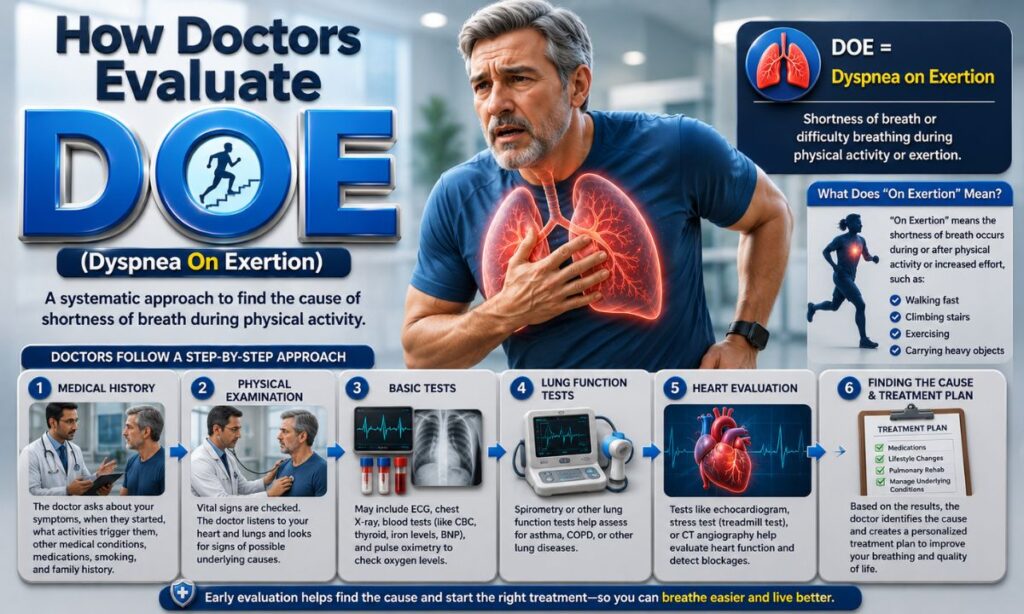
Doctors evaluate DOE by asking detailed questions first. They want to know when it started, how quickly it happens, and what activities trigger it.
After the history, they move to a physical exam and targeted tests. This step-by-step approach helps narrow down whether the cause is cardiac, respiratory, or something else entirely.
Physical Examination
During a physical exam, doctors listen to the heart and lungs for abnormal sounds. They also check oxygen levels, heart rate, and look for swelling in the legs or ankles.
These simple checks often give strong early clues. For example, wheezing suggests a lung issue, while swollen ankles may point toward heart failure.
Common Diagnostic Tests
Common tests for DOE include chest X-rays, electrocardiograms (ECG), and pulmonary function tests. These help doctors see the structure and function of the heart and lungs.
In more complex cases, doctors may order an echocardiogram, blood tests, or a cardiac stress test. [Internal link: guide to common heart and lung diagnostic tests] The right test depends on the suspected cause.
DOE vs. SOB: What’s the Difference?
DOE and SOB (shortness of breath) are closely related but not identical. SOB is the general symptom, while DOE specifically means that breathlessness happens during physical activity.
In other words, all DOE is a type of SOB, but not all SOB is DOE. Someone can have SOB at rest, which is a different and often more urgent concern.
DOE vs. Orthopnea
Orthopnea is shortness of breath that happens while lying flat, and it improves when sitting up. DOE, in contrast, is triggered by movement and activity, not body position.
Both symptoms can occur in the same patient, especially with heart failure. Doctors ask about both separately because each one points to slightly different underlying issues.
DOE vs. Exercise Fatigue
Exercise fatigue is simply feeling tired after physical effort, which is normal for everyone. DOE is different because it specifically involves difficulty breathing, not just muscle tiredness.
A helpful way to tell them apart: fatigue slows you down, but DOE makes you feel like you cannot get enough air. If breathlessness feels disproportionate to the effort, it is more likely DOE than simple fatigue.
| Symptom | Main Feeling | Common Cause |
| DOE | Breathlessness during activity | Heart or lung disease |
| Orthopnea | Breathlessness lying flat | Heart failure |
| Exercise Fatigue | General tiredness | Normal physical exertion |
Common Medical Conditions Associated with DOE
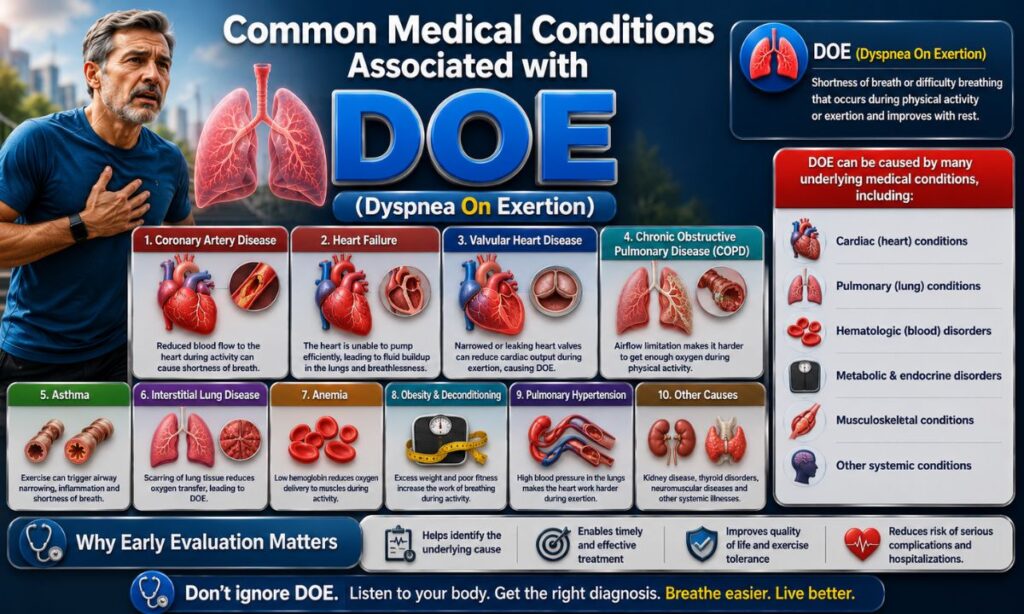
DOE is commonly linked to heart failure, coronary artery disease, asthma, and COPD. It is also seen in conditions like pulmonary hypertension and interstitial lung disease.
Non-cardiac and non-lung causes include anemia, obesity, and deconditioning from a sedentary lifestyle. Because the list is long, doctors rely on tests rather than symptoms alone to confirm the exact cause.
How Is DOE Diagnosed?
DOE is diagnosed by combining a patient’s history, physical exam findings, and diagnostic test results. There is no single test that confirms DOE on its own.
Doctors often use grading scales, like the mMRC dyspnea scale, to measure how severe the breathlessness is. [External source: mMRC dyspnea scale reference] This helps track whether treatment is working over time.
Treatment for DOE
Treatment for DOE depends entirely on its underlying cause. Heart-related DOE may be treated with medications, lifestyle changes, or procedures to improve blood flow.
Lung-related DOE often involves inhalers, breathing exercises, or pulmonary rehabilitation programs. In cases linked to anemia or deconditioning, treatment may simply involve iron supplements or a structured exercise plan.
Can DOE Be Prevented?
DOE can often be prevented or reduced by managing risk factors early. Quitting smoking, maintaining a healthy weight, and staying physically active all help protect heart and lung function.
Regular checkups also matter, since catching heart or lung issues early makes treatment more effective. Prevention is especially important for people with a family history of cardiovascular disease.
When Is DOE a Medical Emergency?
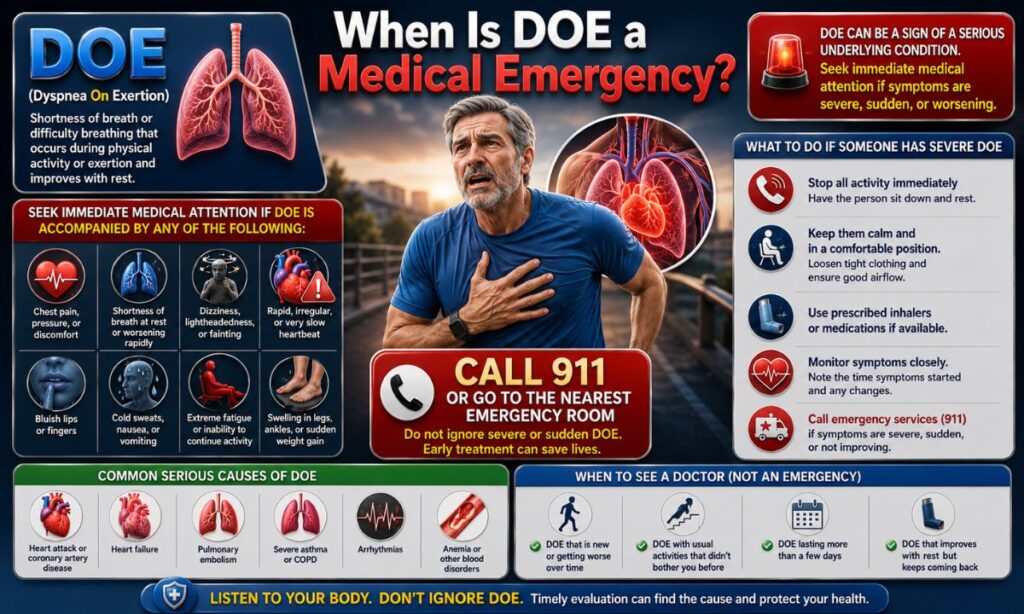
DOE becomes a medical emergency if breathlessness comes on suddenly, is severe, or is paired with chest pain, fainting, or blue-tinged lips. These signs may point to a heart attack or pulmonary embolism.
If DOE occurs even with minimal effort, like walking a few steps, it needs urgent medical attention. Waiting too long in these situations can be dangerous.
Prognosis
The prognosis for DOE depends on its underlying cause and how early it is treated. Mild cases linked to fitness or weight are often fully reversible with lifestyle changes.
Cases tied to chronic heart or lung disease usually require ongoing management rather than a one-time cure. With proper treatment, many patients still maintain a good quality of life.
How Doctors Use DOE in Medical Records
Doctors write DOE in medical records as quick shorthand during patient visits. It saves time while still communicating clearly with other healthcare providers reading the chart.
You might see it written as “DOE with mild exertion” or “DOE x 2 weeks,” which tells other doctors both the severity and duration. This consistent language helps ensure continuity of care.
Real Patient Scenarios
Consider a 55-year-old man who used to jog daily but now feels breathless after one flight of stairs. His doctor notes “new-onset DOE” and orders a cardiac workup.
In another scenario, a patient with asthma reports worsening breathlessness during gym workouts. Here, DOE points toward poorly controlled asthma rather than a heart issue, guiding a different treatment path.
Common Misconceptions About DOE
A common misconception is that DOE only affects older adults, but younger people with asthma, anemia, or anxiety can experience it too. Age is a risk factor, not a requirement.
Another misconception is that DOE always means a serious heart problem. In reality, it can also result from something as simple as low fitness levels or excess weight.
Experience-Based Insight
Patients often say they first noticed DOE during ordinary tasks, like carrying laundry upstairs or walking the dog. These small, everyday moments are usually the earliest clue something has changed.
Clinicians frequently emphasize that tracking DOE over weeks, not just one bad day, gives the clearest picture. A single breathless afternoon may mean nothing, but a steady pattern over time is worth reporting to a doctor.
DOE Medical Abbreviation Cardiology
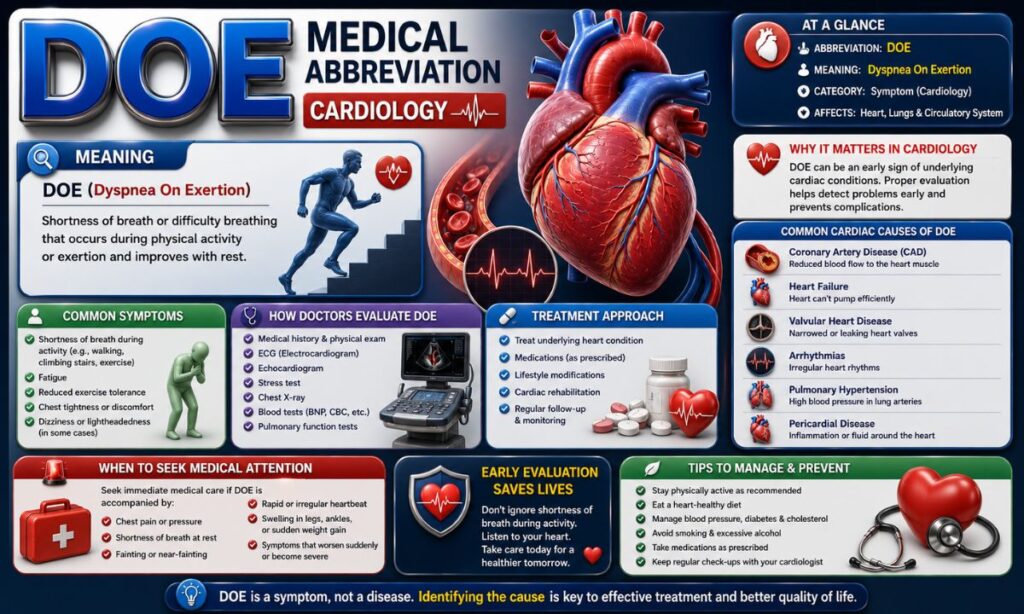
In cardiology, DOE is a key symptom used to assess heart failure severity. Cardiologists often pair DOE findings with tests like echocardiograms to check how well the heart is pumping.
A worsening DOE pattern in a cardiology chart usually prompts a medication review or further imaging. It is considered one of the most reliable early indicators of heart function decline.
PND Medical Abbreviation Blood Test
PND stands for “paroxysmal nocturnal dyspnea,” which is sudden breathlessness that wakes a person from sleep. It is not a blood test itself, but doctors often order blood tests, like BNP levels, when PND is reported.
These blood tests help confirm whether heart failure is contributing to the symptom. PND and DOE frequently appear together in the same patient’s history.
PND Medical Abbreviation Pregnancy

During pregnancy, PND (paroxysmal nocturnal dyspnea) can occur due to increased blood volume and pressure on the diaphragm. It is usually mild but should still be reported to a doctor.
Doctors distinguish normal pregnancy-related breathlessness from signs of a more serious condition, like preeclampsia or heart strain. [External source: pregnancy-related dyspnea guidelines] Monitoring during prenatal visits helps catch anything unusual early.
Frequently Asked Questions
What does DOE stand for in medical terms?
DOE stands for “dyspnea on exertion,” meaning shortness of breath during physical activity. It is a symptom, not a standalone diagnosis.
Is DOE considered a diagnosis or just a symptom?
DOE is a symptom, not a diagnosis on its own. Doctors use it as a clue to investigate an underlying heart, lung, or other medical condition.
How serious is DOE (dyspnea on exertion)?
DOE can range from mild to serious depending on its cause and how quickly it develops. Sudden or severe DOE, especially with chest pain, needs urgent medical evaluation.
What are the common causes of dyspnea on exertion?
Common causes include heart failure, coronary artery disease, asthma, and COPD. Anemia, obesity, and poor physical fitness can also contribute.
Can anxiety or stress cause DOE?
Yes, anxiety and stress can cause breathlessness that mimics DOE. However, doctors typically rule out heart and lung causes first before attributing symptoms to anxiety.
What tests do doctors use to diagnose DOE?
Doctors commonly use chest X-rays, ECGs, pulmonary function tests, and echocardiograms. The specific tests depend on the suspected underlying cause.
Can DOE be treated or improved over time?
Yes, DOE often improves once the underlying cause is treated. Lifestyle changes, medications, or rehabilitation programs can significantly reduce symptoms.
When should you see a doctor for DOE?
See a doctor if DOE is new, worsening, or happening with less activity than before. Immediate care is needed if it comes with chest pain or fainting.
Conclusion
DOE, or dyspnea on exertion, is a simple two-letter clue that carries real medical weight. It tells doctors that something changes in the body when a person becomes physically active, and that change is always worth investigating.
Understanding DOE means understanding your own body’s warning signals. If breathlessness during everyday activity feels new or is getting worse, do not wait — talk to a doctor and get it checked. Catching the cause of DOE early is often the difference between a simple fix and a serious complication.