

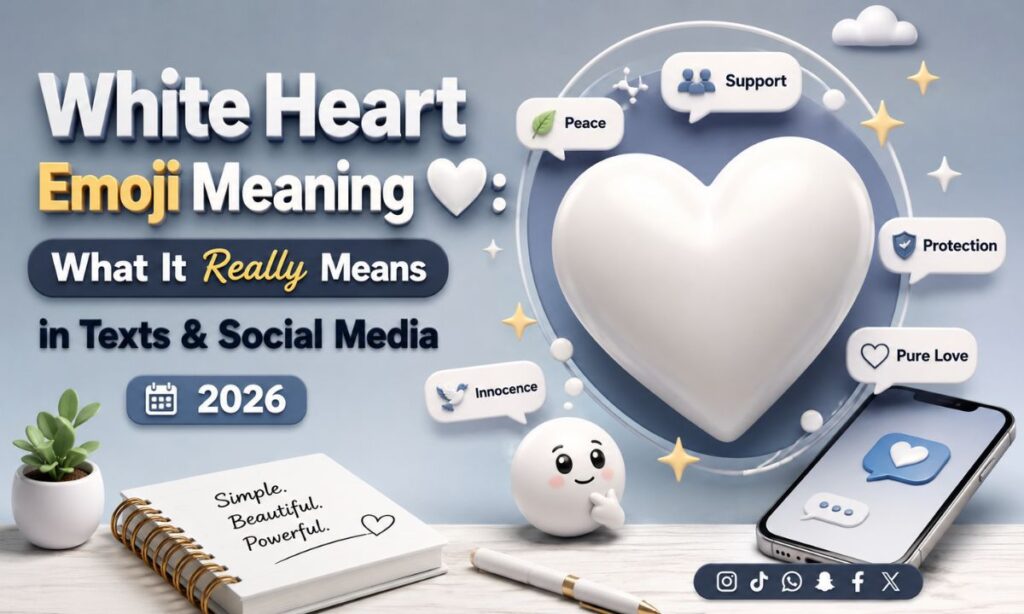

White heart emoji meaning isn’t as simple as most people think, even though it shows up everywhere — texts, comments, captions, and even memorial posts.
Some people use it to say “pure love.” Others use it for grief, calmness, or just because it looks clean on their profile. That’s exactly why so many people search for the white heart emoji meaning before replying to one.
This guide breaks down every angle of the white heart emoji meaning — where it started, how it’s used today, and what it usually signals when someone sends it to you.
Meaning & Definition of the White Heart Emoji
At its core, the white heart emoji meaning points to purity, calmness, and honest affection. It’s a softer version of the classic red heart, without the intensity attached.
People also use it to show respect, sympathy, or quiet support. Unlike red or pink hearts, white feels neutral and safe, which is why friends, family, and even coworkers use it freely.
Because the color white is linked to peace and simplicity in many cultures, the emoji naturally picked up that same tone. It rarely feels romantic on its own.
That’s what makes the white heart emoji meaning flexible. It fits comfort messages, condolence posts, and light romantic texts equally well.
Background & Origin of the White Heart Emoji
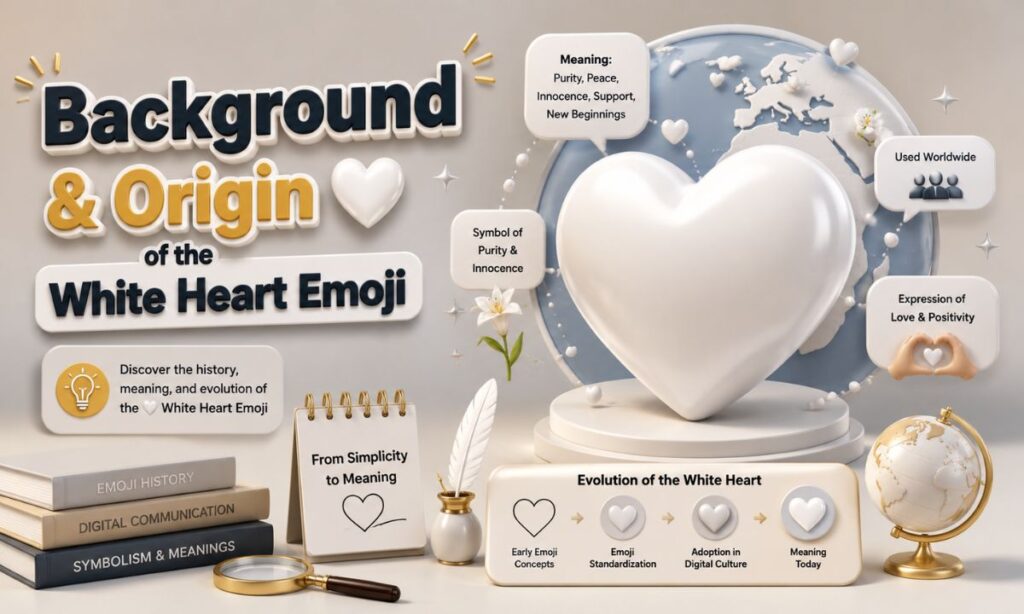
The white heart emoji was added to the Unicode standard in 2019, much later than the original red heart. It became widely available on phones and apps by 2020.
Its late arrival is part of why the white heart emoji meaning still feels fresh. Older hearts like red and pink had years to build strong associations, while white started with a blank slate.
Designers chose white because it stood apart from every other heart color already in use. It gave people a neutral option for love, grief, or calm support.
Usage in Different Contexts
The white heart emoji meaning shifts depending on where and how it’s used. In casual texts, it often means “aww” or gentle affection.
On social media, people use it after sad news, in memorial posts, or under peaceful nature photos. It signals respect more than romance in these settings.
In group chats, a white heart usually reacts to something wholesome or kind. It rarely starts an argument the way a red heart reaction sometimes can.
Some brands also use it in minimalist marketing, since white pairs well with clean, modern aesthetics.
Meanings Across Platforms
On Instagram, the white heart emoji meaning leans toward aesthetic captions and soft, calm vibes. Influencers use it under monochrome or lifestyle photos.
On TikTok, it often appears in comments as quiet appreciation, especially on emotional or touching videos. It’s less flirty than a red heart there.
WhatsApp users tend to use it in close friend or family chats to express warmth without pressure. Reddit threads show similar patterns, with users explaining it as “pure, no drama” love.
Twitter and X users often pair it with minimalist or aesthetic-themed accounts, using it almost like a visual signature.
Examples in Real Conversations or Memes
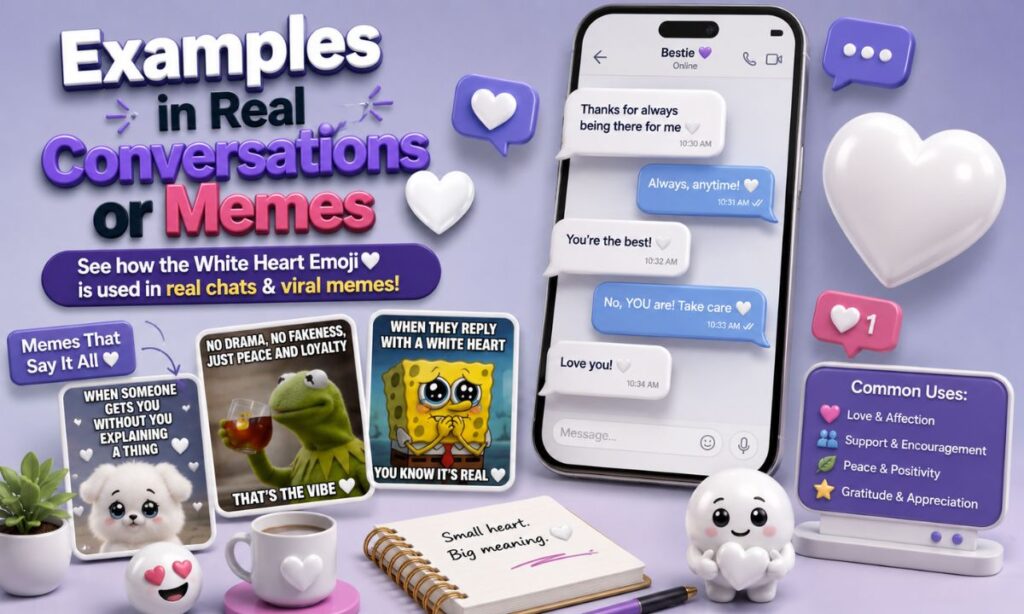
A friend might text “miss you 🤍” after a long time apart, showing simple, honest affection. This use case captures the white heart emoji meaning perfectly.
In memes, it’s often paired with soft, “wholesome” content, like pets or good news. It rarely fits sarcastic or ironic memes the way skull or laughing emojis do.
Some couples use it as a private symbol for calm, steady love, separate from the excitement red hearts represent. It becomes a quiet inside joke over time.
Cultural or Regional Interpretations
In Western cultures, white generally represents purity, peace, and new beginnings, which shapes the white heart emoji meaning toward gentle affection.
In some Eastern cultures, white is traditionally linked to mourning and funerals. This adds a layer of respect or remembrance to how the emoji gets used there.
Because of this split, the same emoji can feel romantic in one country and reflective or solemn in another. Context always matters more than the symbol alone.
Global audiences on social media often blend these meanings, so younger users may not even know the mourning association exists.
Other Fields: Technical or Symbolic Meanings
Outside of texting, the white heart emoji meaning sometimes shows up in health and wellness spaces, representing calm or mental clarity.
In minimalist design and branding, it’s used as a symbol of simplicity rather than emotion at all. Some brands use it purely for visual balance.
Medical awareness campaigns occasionally use white hearts to represent specific causes, similar to how ribbons use color coding. This is far less common than its everyday texting use.
Overall, its symbolic meaning stays flexible enough to fit both emotional and non-emotional contexts.
Common Misconceptions & Mistakes
A common mistake is assuming the white heart always means romantic love, similar to red. In reality, the white heart emoji meaning is usually softer and more platonic.
Another misconception is thinking it’s a “cold” or distant emoji. Most users actually see it as warm, just calmer than red or pink.
Some people also confuse it with mourning symbolism from other cultures, reading sadness into a message that was meant to be sweet. Checking context prevents this confusion.
Assuming intent without asking is the biggest error people make when receiving this emoji.
Psychological or Emotional Meaning Behind It
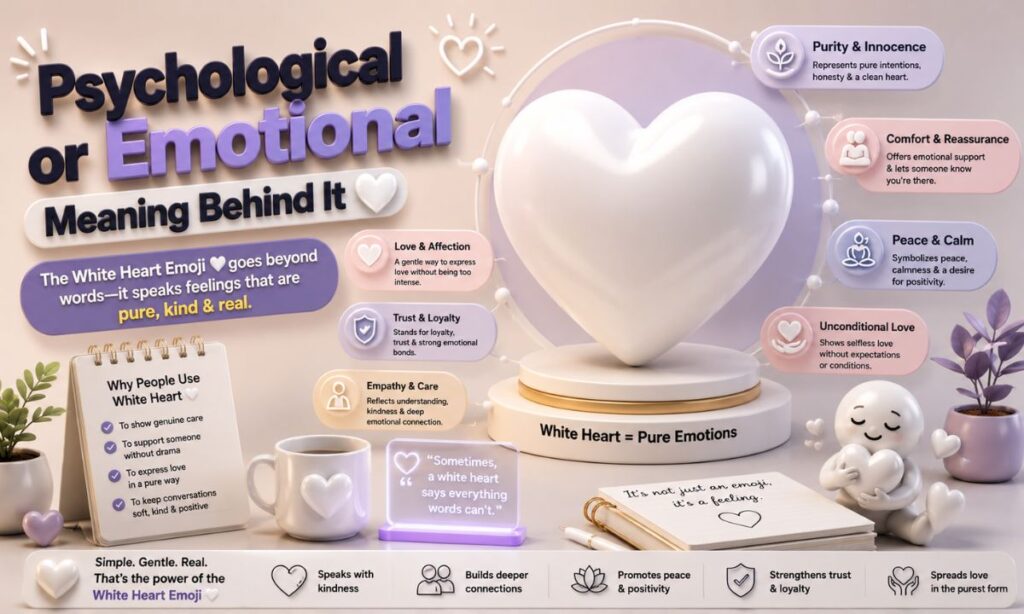
Psychologically, white is often tied to feelings of safety, calm, and emotional clarity. That’s likely why the white heart emoji meaning feels less intense than red.
People who send it may be expressing trust rather than passion. It suggests steadiness, the kind of affection that doesn’t need grand gestures.
It can also signal emotional support during hard times, since white avoids the romantic pressure that red or pink hearts carry. This makes it common in comfort messages.
For some, it simply feels “clean” and matches their overall communication style, without deeper emotional weight attached.
Similar Terms & Alternatives
Related emojis include the black heart (often mysterious or edgy), the grey heart (often sad or numb), and the classic red heart (passionate love).
The white heart sits closest in tone to the pink heart, though pink still carries slightly more romantic energy. Both are considered “safe” hearts for casual affection.
People sometimes use the phrase “pure heart” or “clean love” as text alternatives when the emoji itself feels too vague for the message they want to send.
Understanding these alternatives helps clarify the white heart emoji meaning by comparison.
Is It Offensive or Friendly?
The white heart emoji meaning is almost always friendly, not offensive. It’s considered one of the safest hearts to send in any relationship type.
Because it lacks strong romantic or aggressive tones, it rarely causes misunderstandings the way red hearts or angry emojis can. Coworkers and casual acquaintances use it comfortably.
The only exception is in cultures where white is linked to funerals, where it could feel out of place in cheerful conversations. This is rare in everyday Western texting.
Overall, it’s considered a low-risk, high-warmth emoji choice.
Famous Quotes or Lines Using the White Heart Emoji
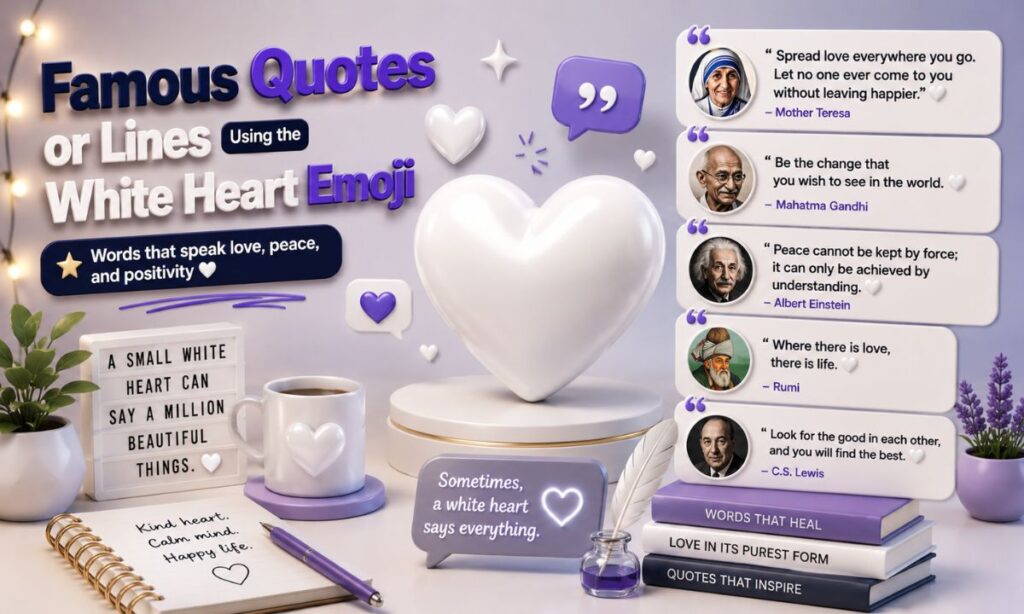
Public figures and influencers often pair the white heart with quotes about peace, healing, or gratitude in captions. It reinforces calm, positive messaging.
While no single quote “owns” the emoji, phrases like “pure love,” “peace and love,” or “grateful heart” frequently appear alongside it online.
Song lyrics and quote graphics on social media use it to soften emotional statements, especially ones about loss or reflection. It adds gentleness without heaviness.
This pattern shows how flexible the symbol is across creative and personal expression.
Grammar or Linguistic Insights
Linguistically, the white heart emoji functions like a tone marker rather than a word. It softens whatever text comes before it.
Placed at the end of a sentence, it signals sincerity, similar to how “with love” works in a letter. Placed alone, it can act as a full response by itself.
Unlike punctuation, emojis like this one carry cultural and emotional weight, which is why the white heart emoji meaning depends so heavily on context and relationship.
Its flexible grammar role is part of why it fits so many different message types.
How to Respond to the White Heart Emoji
If a close friend sends it, a simple “🤍” or a warm reply usually works well. It doesn’t require an elaborate response.
If it comes from a romantic interest, consider the conversation’s tone before reading too much into it. Ask directly if the meaning feels unclear.
In professional or casual acquaintance settings, treating it as a polite, friendly gesture is usually the safest interpretation. Overanalyzing it can create unnecessary confusion.
Matching the sender’s energy is generally the best approach.
Differences From Similar Heart Emojis
Red hearts represent passionate, romantic love, while the white heart emoji meaning leans toward calm, pure affection instead.
Black hearts often suggest dark humor, edginess, or sometimes grief, standing in contrast to white’s lighter tone. Grey hearts usually signal sadness or emotional numbness.
Pink hearts sit closer to white but still carry a slightly flirtier, softer romantic tone. Yellow hearts typically represent friendship rather than romance at all.
| Emoji | Common Meaning |
| 🤍 White Heart | Pure, calm, gentle affection |
| ❤️ Red Heart | Passionate romantic love |
| 🖤 Black Heart | Edgy, dark humor, or grief |
| 🩶 Grey Heart | Sadness, emotional numbness |
| 💛 Yellow Heart | Friendship |
Relevance in Online Conversations & Dating Apps
On dating apps, the white heart emoji meaning often signals genuine interest without coming on too strong. It feels safer than a red heart for early conversations.
Many users see it as a “slow burn” signal, suggesting real interest rather than a quick, impulsive reaction. It builds trust gradually.
In general online chats, it works well for supportive comments, especially on emotional or vulnerable posts. It rarely feels performative compared to flashier emojis.
This makes it a popular early-stage choice for cautious daters.
Popularity & Trends Over Time
Since its 2019 release, the white heart emoji meaning has grown steadily more popular, especially among users who prefer minimalist aesthetics.
Its use spiked alongside the rise of “clean girl” and minimalist social media trends around 2022 and 2023. Neutral tones became a broader style choice online.
By 2026, it remains a favorite for calm, aesthetic captions and gentle emotional expression, holding steady rather than fading like some emoji trends do.
Its simplicity is likely why it continues to stay relevant.
White Heart Meaning from a Girl
When a girl sends a white heart, it usually reflects gentle, sincere affection rather than intense romantic interest. It often signals comfort and trust.
It can also simply mean she finds something sweet or wholesome, without any deeper romantic signal attached. Context from the rest of the conversation matters most here.
White Heart Meaning from a Boy
When a boy sends a white heart, the white heart emoji meaning often reflects calm, genuine interest rather than overt flirtation. It can feel more thoughtful than a quick red heart reaction.
It may also simply express support or appreciation, especially in friendships. Reading the full conversation helps avoid misreading his intent.
White Heart Emoji Meaning vs Red
The white heart emoji meaning centers on purity and calm affection, while red represents intense, passionate love. Red feels bold; white feels gentle.
Choosing between them often comes down to how strong the emotion is. White works for subtle warmth, and red works for clear romantic passion.
White Heart Emoji Meaning in Whatsapp
On WhatsApp, the white heart emoji meaning usually reflects close, comfortable relationships like family or long-term friends. It feels personal without being overly romantic.
It’s commonly used in daily check-ins or goodnight texts, expressing steady affection rather than dramatic emotion.
White Heart Emoji Meaning Reddit
Reddit threads discussing the white heart emoji meaning often describe it as “pure love without pressure.” Users frequently contrast it with red hearts, calling white more genuine and less intense.
Many Reddit users also mention using it for platonic love, especially toward close friends or family members.
White Heart Meaning in Relationship
Inside a relationship, the white heart emoji meaning often represents deep trust and calm, steady love rather than fiery passion. It suggests emotional safety.
Couples sometimes adopt it as a symbol for their bond specifically because it feels more mature and less performative than flashier heart emojis.
Frequently Asked Questions
What does the white heart emoji mean from a girl or a guy?
It usually shows calm, sincere affection rather than intense romance, no matter who sends it. Context in the chat decides the rest.
Is the white heart emoji romantic or just friendly?
It’s mostly friendly and low-pressure, though it can turn romantic depending on the sender. Unlike red hearts, it rarely forces a romantic reading.
What’s the difference between a white heart and a black heart emoji?
White signals purity, calm, and warmth, while black usually reflects dark humor, edginess, or grief. They sit on almost opposite emotional ends.
Does the white heart emoji mean something different on Instagram vs WhatsApp?
Yes. On Instagram it often fits aesthetic or emotional captions, while on WhatsApp it usually shows up in close, personal chats.
Why do people use a white heart instead of a red heart?
It expresses affection without romantic pressure, making it safer for friends, family, and early relationships.
Can the white heart emoji mean grief or sadness?
In some cultures, yes, since white is linked to mourning. In most Western texting, though, it leans toward warmth instead.
How should I reply to a white heart emoji?
A simple heart back or a warm reply usually works fine. If it’s from someone you’re dating, it’s okay to ask what they meant.
Conclusion
At its core, the white heart emoji meaning is about gentle, honest affection — calmer than red, warmer than black, and far more flexible than most people realize.
Whether it shows up from a friend, a partner, or a stranger online, context always tells you more than the symbol alone.
Next time you see it in your messages, you’ll know exactly what it’s really saying. 🤍