


TP mean in slang usually comes down to one simple thing: “Toilet Paper.” That’s the quick answer — used literally, or as a reference to the classic prank of “TP-ing” someone’s house.
You got a text that just says “TP” and now you’re stuck staring at your screen, half-smiling, half-confused. You’re not alone — this is one of the most searched short-form slang terms on TikTok, Snapchat, and group chats in 2026.
But depending on where you see TP (a business email, a dating app, a Snapchat streak), it can carry a completely different meaning.
This guide breaks down every common use of TP — in texting, chat apps, Snapchat, Instagram, TikTok, WhatsApp, relationships, and business — so you’re never left guessing again.
TP Meaning in Text
In a text message, TP most commonly means “Toilet Paper.” It’s used literally (someone asking a roommate to grab TP from the store) or jokingly, referencing the prank of throwing toilet paper over someone’s house or car.
Beyond that literal use, TP meaning in text can shift with context. Toilet Paper is the standalone definition that holds up on its own — no matter who sends it or why. In business or formal texts, TP can instead stand for “Third Party,” a completely separate meaning that depends entirely on the conversation around it.
Quick breakdown of TP in text:
- Toilet Paper — the most common, everyday meaning.
- TP-ing — the prank of covering a house or car in toilet paper.
- Third Party — a formal/business meaning, rarely used in casual texts.
What Does TP Mean in Chat?
In casual chat apps and group messages, TP usually keeps its everyday meaning — Toilet Paper — but tone and context decide the real intent. A friend typing “TP run?” is asking about a store trip. A friend typing “we TP-ing his house tonight?” means a prank.
The core definition stays the same across chat platforms: TP is short for Toilet Paper. What changes is the intent behind it — practical (you need supplies), playful (a prank plan), or occasionally sarcastic when someone’s teasing a friend about running out of the essentials.
TP Meaning on Snapchat
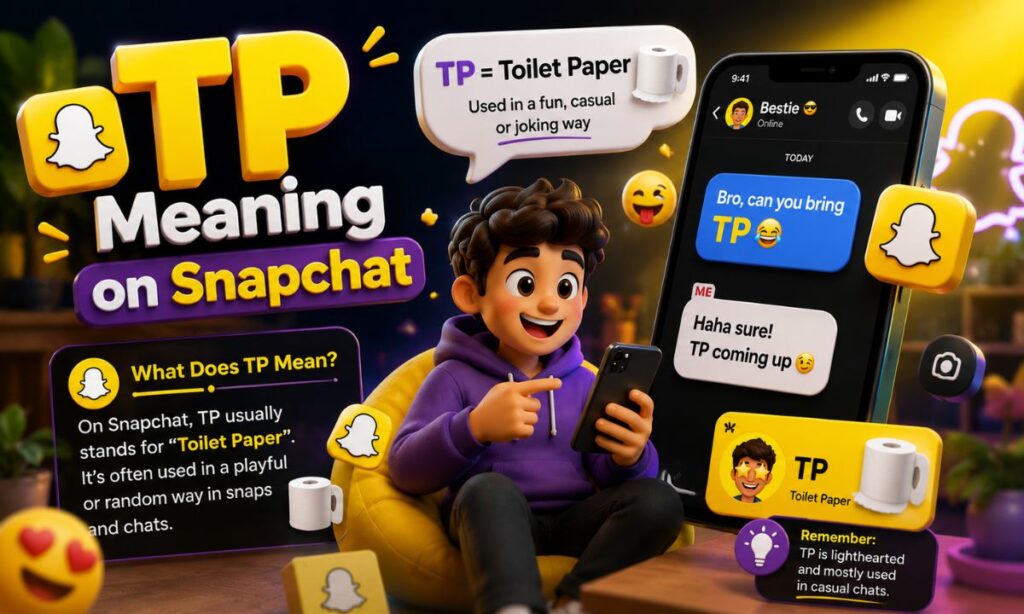
On Snapchat, TP is rarely used as a distinct slang term on its own — it usually shows up the same way it does in regular texting, tied to the Toilet Paper or “TP-ing a house” meaning. Snapchat’s fast, disappearing-message culture just makes short abbreviations like this more common.
Snapchat leans heavily on abbreviations because messages and stories are meant to be quick. TP fits that pattern as a stand-in for Toilet Paper, often used in Snap captions about a prank, a shopping trip, or a joke between friends.
TP Meaning on Instagram, TikTok, and WhatsApp
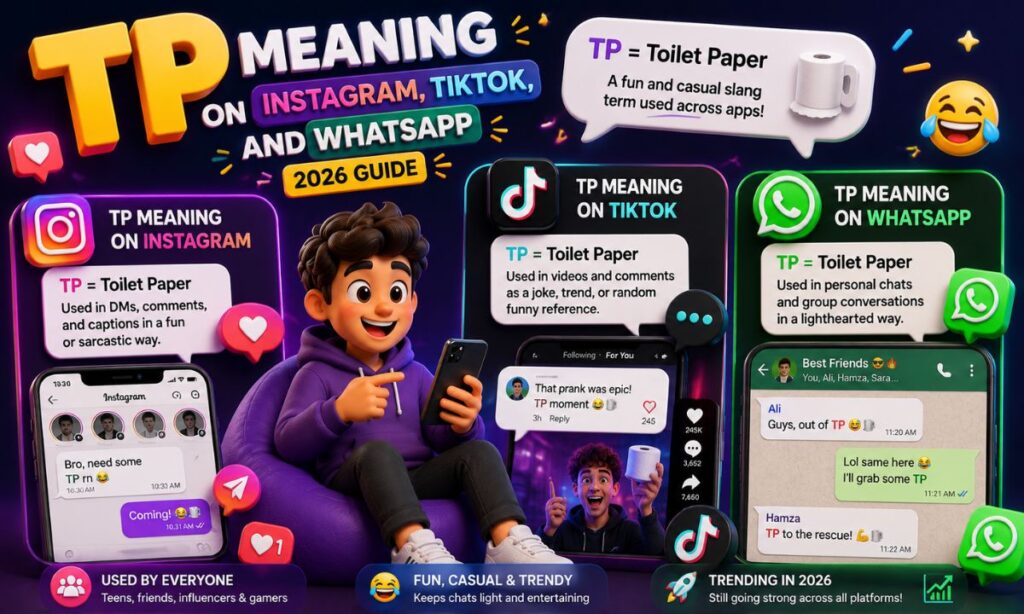
Across Instagram, TikTok, and WhatsApp, TP carries the same base meaning — Toilet Paper — but each platform gives it a slightly different flavor. TikTok often uses it in prank or comedy captions; Instagram uses it in comments or captions the same way; WhatsApp keeps it closer to literal, everyday use.
TP is a shortened form of “Toilet Paper,” and shortened forms like this spread fastest on platforms built for speed and brevity. TikTok videos tagged with TP pranks, Instagram captions joking about a “TP mission,” and WhatsApp group chats organizing a supply run all use the term the same way — just with different social energy.
How TP shows up on each platform:
- TikTok — prank videos, comedy captions, “TP challenge” trends.
- Instagram — comments and captions joking about a “TP mission.”
- WhatsApp — mostly literal, everyday supply-run texts.
Is TP an Acronym or Short Form?
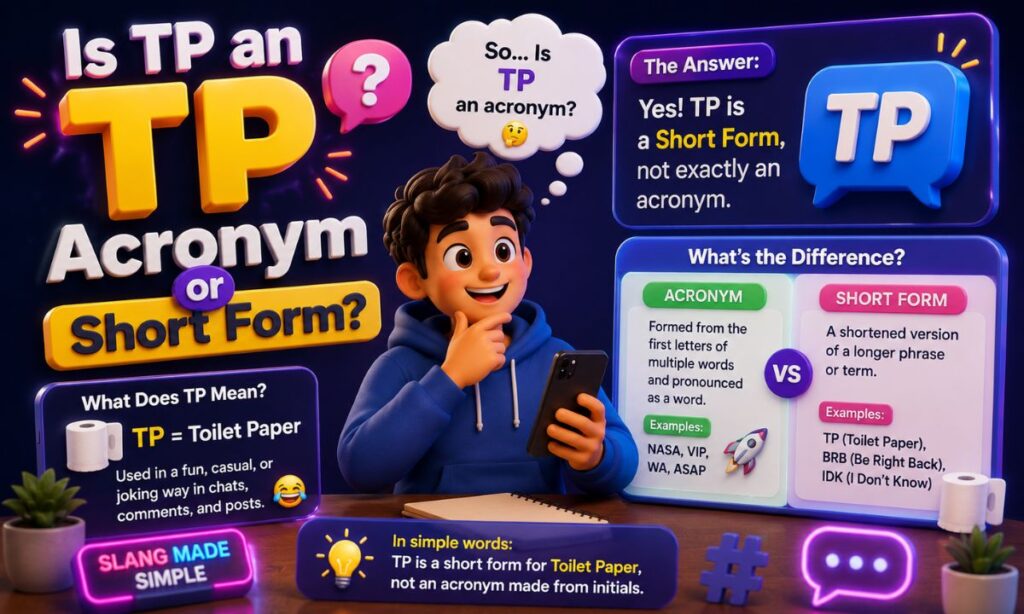
TP is a short form (an abbreviation), not a true acronym. An acronym is pronounced as a new word (like NASA); TP is simply read letter by letter, standing in for “Toilet Paper.”
Technically, short forms like TP are called initialisms — abbreviations made from the first letters of a phrase, spoken as separate letters rather than blended into one word. TP fits neatly into this category, alongside other everyday initialisms like BRB or TBH.
Funny Tone
In a funny tone, TP almost always points back to the prank meaning — someone joking about covering a house, car, or tree in toilet paper as a lighthearted stunt. It’s a classic, low-stakes joke that’s been around for decades and still shows up in texts today.
The humor comes from the shared cultural reference: everyone knows what “getting TP’d” means, so the joke lands instantly. A text like “we’re TP-ing Jake’s yard tonight, you in?” reads as playful mischief, not anything serious.
Sarcastic Tone
Used sarcastically, TP can poke fun at someone who’s disorganized or always running out of basic supplies — think “oh, you forgot the TP again?” aimed at a roommate or partner. The sarcasm sits in the tone of the conversation, not in the word itself.
Sarcasm changes how a literal statement lands, and TP is no exception. “Wow, nice job remembering the TP this time” said after someone forgot it last week is a sarcastic jab dressed up as a compliment.
Romantic Tone
TP doesn’t have a built-in romantic meaning, but it can appear in romantic-adjacent texts in mundane, relationship-shorthand ways — like a couple texting about errands or a shared apartment. “Can you grab TP on your way home, babe?” is romantic simply because of who’s saying it.
In relationships, the warmth comes from the domestic context, not the abbreviation itself. TP shows up in these everyday exchanges the same way it would with any roommate, just wrapped in more affectionate language.
Angry Tone
In an angry or frustrated tone, TP usually shows up when someone’s upset about a prank gone too far — like a house genuinely getting TP’d without consent, causing a mess or damage. “Someone TP’d my yard and now I have to clean it up” reads as annoyed, not playful.
The anger here isn’t about the word TP itself but about the situation it describes. A prank that felt fun to one person can feel disrespectful to another, especially if property gets damaged or the joke wasn’t welcome.
Playful Tone
Playful use of TP is the most common tone you’ll see — friends joking about a TP prank, teasing each other about buying supplies, or using it as a lighthearted dare. “Should we TP Mia’s dorm for her birthday?” is a typical playful example.
This tone dominates because the original TP prank itself is rooted in fun, harmless mischief between friends. It’s low-stakes, nostalgic, and easy to laugh about, which keeps the playful usage alive across generations of texters.
Funny Reply
A funny reply to “TP?” could be something like “only if we’re doing it Mission Impossible style” — leaning into the prank meaning with a joke. Funny replies work best when they build on the shared understanding of TP as a prank or supply-run reference.
Good funny replies add a twist rather than just confirming the plan. Something like “bringing extra rolls, we’re going pro this year” keeps the joke going instead of ending the exchange with a flat yes.
Serious Reply
A serious reply treats TP at face value — usually the literal, practical meaning. “Yeah, we’re out, can you pick some up on your way back?” is a straightforward, no-frills response with zero joking involved.
Serious replies matter most in shared-living or family group chats, where TP is genuinely about restocking supplies. Keeping the reply direct avoids confusion, especially since the word itself can carry multiple meanings depending on context.
Flirty Reply
A flirty reply leans into playful teasing rather than the literal meaning — something like “only if you’re the one holding the flashlight” in response to a TP-prank invite. The flirtation comes from tone and wordplay, not from TP itself.
This kind of reply works in texting between people who already have some romantic or playful chemistry. It turns an ordinary abbreviation into an excuse for banter, which is part of why short slang terms like TP stay popular in casual dating texts.
Neutral Reply
A neutral reply simply acknowledges TP without adding humor, sarcasm, or flirtation — something like “got it, I’ll grab some” or “sounds good.” It’s the most common reply type in everyday, low-stakes conversations.
Neutral replies are useful when you’re unsure of someone’s tone or you just want to move the conversation along efficiently. They keep things clear, especially in group chats or work-adjacent messages where over-interpreting a short word like TP could cause unnecessary confusion.
Is TP Rude?
TP itself is not rude — it’s a neutral abbreviation with harmless, everyday meanings. Whether it comes across as rude depends entirely on the context and the action it’s describing, not the letters themselves.
The word becomes a problem only when it’s tied to an unwanted prank, like TP-ing someone’s property without permission, which can feel disrespectful or cause real cleanup costs. Used in normal conversation about supplies or a consensual joke among friends, TP carries no rude connotation at all.
Is TP a Bad Word?
No, TP is not a bad word. It’s a mild, widely accepted abbreviation used across texting, social media, and everyday conversation without any inherent offensive meaning.
Because TP is so commonly tied to toilet paper and harmless pranks, it doesn’t carry the weight of slurs or explicit slang. Parents, teachers, and coworkers alike generally recognize it as innocent shorthand rather than anything inappropriate.
Should You Use It in School or Office?
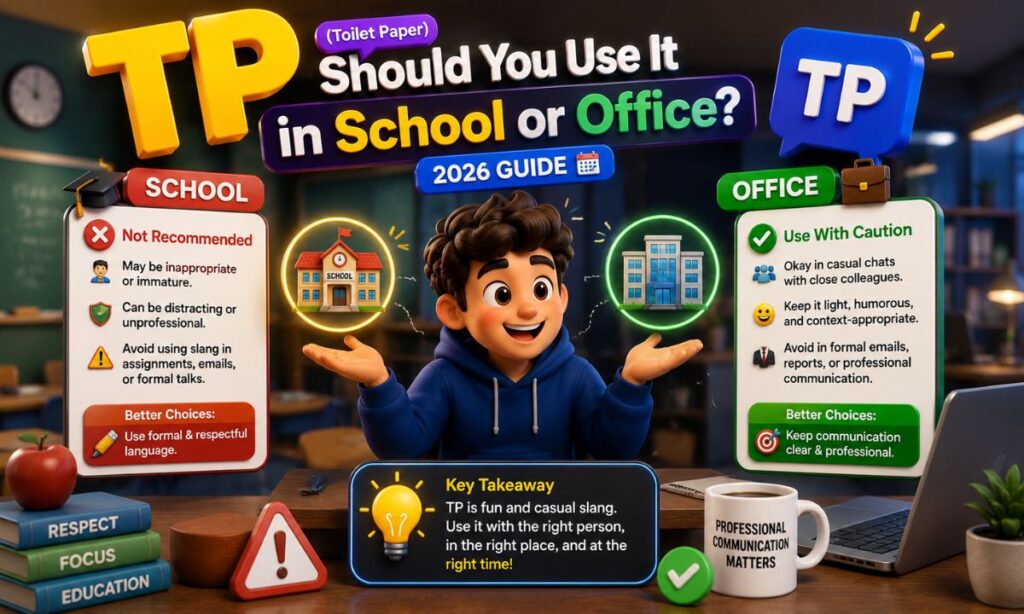
Yes, TP is generally fine to use in casual school conversations, but it’s worth avoiding in formal office communication where its meaning might be misread as unclear or too informal. Context always matters more than the word itself.
In a school hallway or group chat, TP reads as normal teen shorthand. In a professional email, though, an abbreviation like TP can look unclear or unprofessional — better to spell out “toilet paper” or “third party” depending on what you actually mean.
Tp mean in slang text urban dictionary
On Urban Dictionary, TP is documented primarily as slang for “Toilet Paper,” along with the associated prank of TP-ing a house. Some entries also list looser, community-submitted definitions, but Toilet Paper remains the dominant, most-upvoted meaning.
Urban Dictionary entries are crowd-sourced, so definitions can vary in reliability. [External source: Urban Dictionary entry for “TP” needing citation] The safest takeaway is that Toilet Paper is the meaning most consistently recognized across entries and everyday usage.
What does tp mean on snapchat
On Snapchat specifically, TP follows the same pattern as the rest of texting culture — it stands for Toilet Paper, often used in prank-related Snaps, captions, or quick messages about supplies.
Snapchat doesn’t have a platform-specific redefinition of TP; it borrows the term directly from general texting slang. That consistency makes it easy to understand TP the same way across Snapchat, iMessage, or any other messaging app.
TP meaning in relationship
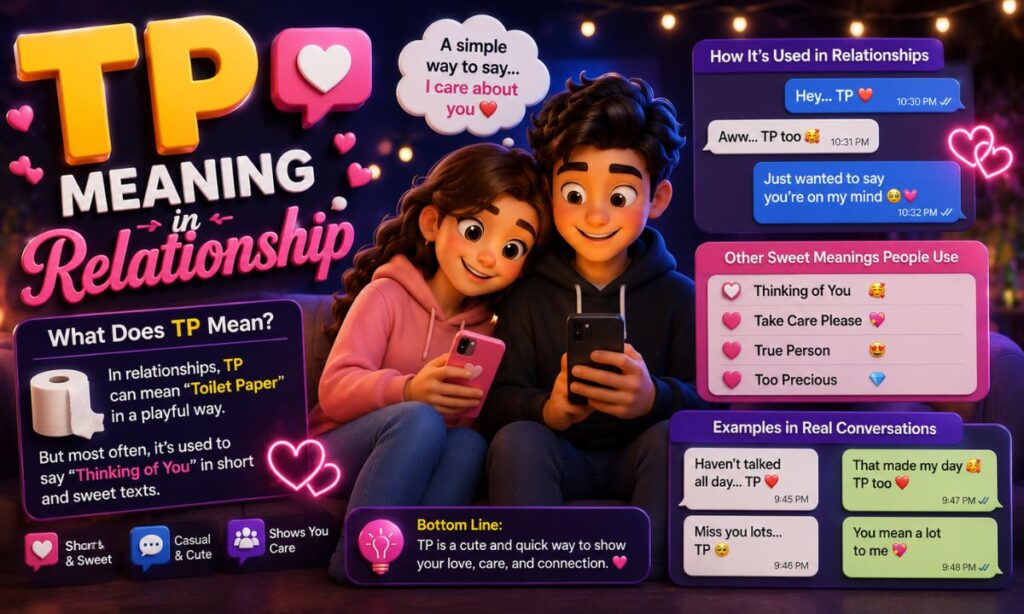
In a relationship context, TP usually keeps its literal meaning tied to shared living — like reminding a partner to buy toilet paper — rather than taking on a separate romantic definition. It’s practical shorthand more than relationship slang.
Flag: some online communities occasionally use TP informally to mean “toxic person” in relationship discussions, but this usage is inconsistent and not widely established, so it shouldn’t be treated as a confirmed definition.] Sticking with context clues is the safest way to interpret it.
TP meaning in business
In business and professional settings, TP most commonly stands for “Third Party,” referring to an outside individual or company involved in a deal, contract, or transaction. This is a completely different meaning from the texting sense of TP.
Third Party is a standard term in contracts, insurance, and legal documents, describing anyone outside the two main parties in an agreement. Recognizing this meaning matters in professional emails, where the texting definition simply doesn’t apply.
Where “Third Party” (TP) typically appears in business:
- Contracts — an outside company or individual involved in an agreement.
- Insurance — a claim or liability involving someone outside the policyholder.
- Legal documents — any party beyond the two main signees.
Frequently Asked Questions
What does TP mean in text?
TP most commonly means “Toilet Paper” in text messages, often referencing either the item itself or the prank of TP-ing a house.
Is TP rude?
No, TP is not inherently rude — it only feels disrespectful if it’s tied to an unwanted or damaging prank.
What does TP mean on Snapchat?
On Snapchat, TP carries the same meaning as regular texting slang: Toilet Paper, often used in prank or supply-related Snaps.
Is TP the same as IDK?
No, TP and IDK are unrelated abbreviations — IDK means “I don’t know,” while TP means “Toilet Paper.”
Can adults use TP slang?
Yes, TP is casual, generation-neutral slang that adults use just as often as teens, especially around prank jokes or household texts.
How do you respond to TP in text?
Reply based on context — confirm plainly if it’s about supplies, or play along with a joke if it’s clearly a prank reference.
Does TP always mean toilet paper?
No, TP can also mean “Third Party” in business contexts, so the correct meaning depends on the conversation.
Why do people shorten words like TP?
People shorten words like TP to type faster, keep messages casual, and match the quick pace of texting and social media culture.
Conclusion
At its core, TP is simple: in almost every texting and social media context, it means “Toilet Paper,” whether used literally or as a nod to the classic house-prank tradition. The only real exception is professional or business writing, where TP usually switches to meaning “Third Party.”
The next time TP shows up in your messages, check the context before you reply — a group chat about a shopping list needs a different answer than a business email about a contract. Once you know the difference, you’ll never be confused by this two-letter text again.