
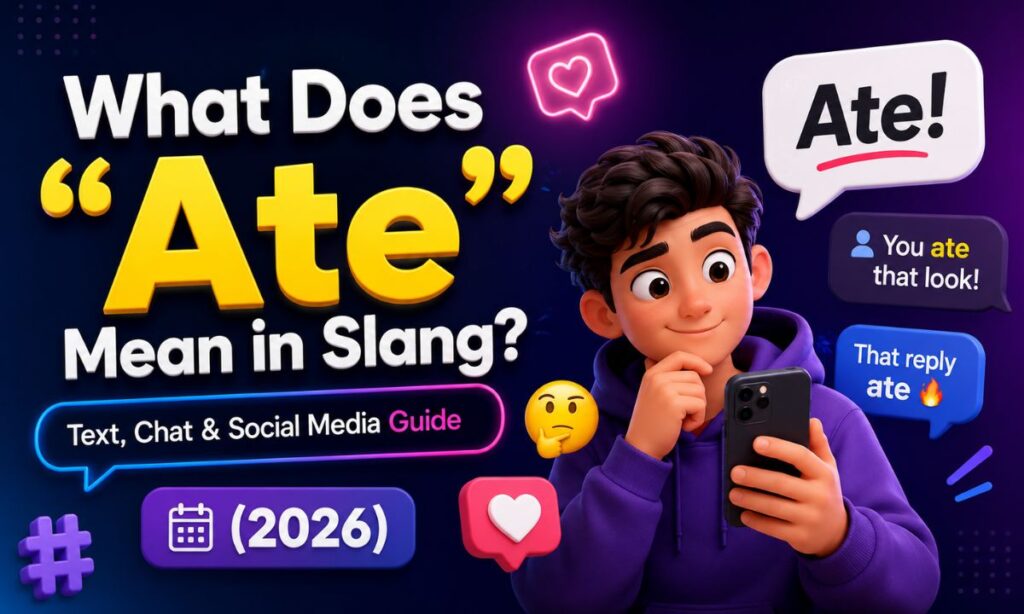

What does “ate” mean? In short: it means someone did something exceptionally well — they performed, looked, or delivered so perfectly that they “ate” (consumed, dominated, nailed) the moment. It has nothing to do with food.
If someone just texted you “you ATE that outfit” and you have no idea whether to say thank you or apologize, you’re not alone.
This word shows up constantly in texts, comments, and captions, and if you’re not chronically online, it can be genuinely confusing. This guide breaks down exactly where the word comes from, how people use it across every major platform, when it’s a compliment versus when it might sound sarcastic, and how to reply the right way — so you never have to guess again.
Ate Meaning in Text
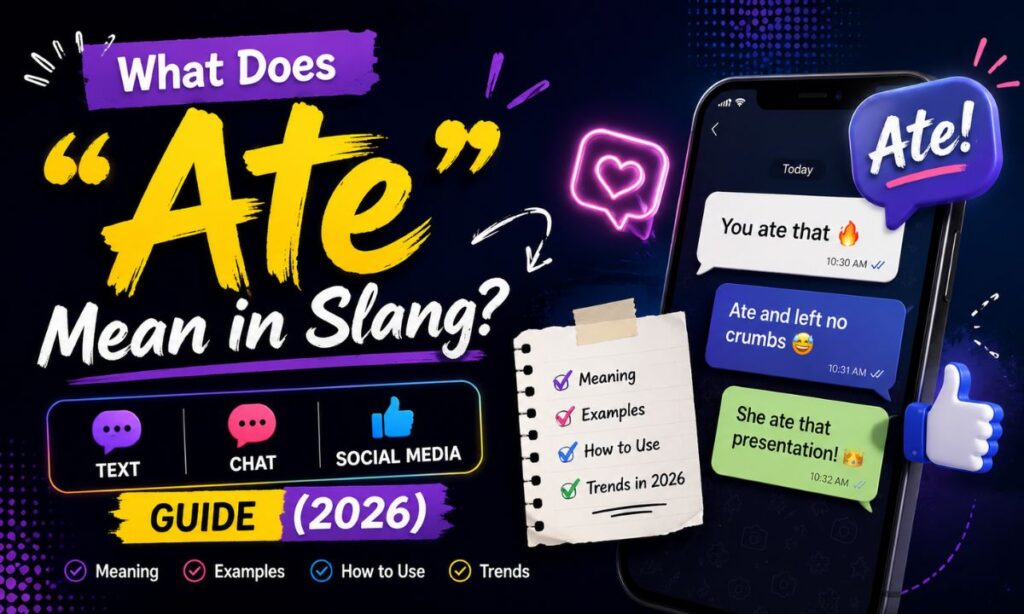
In a text message, “ate” is a compliment that means someone performed, styled, or executed something flawlessly. If a friend texts “ate 😭🔥” under a photo you sent, they’re saying you look incredible — not commenting on your dinner.
The word usually appears alone, in all caps, or paired with emojis like 🔥, 💅, or 😭 to add emphasis. It’s short, punchy, and meant to convey excitement fast. You’ll also see it combined into phrases like “you ate that” or “she ate,” both of which carry the same core meaning: total success, no notes.
[Image: Screenshot example of a text conversation using “ate” as a compliment]
Ate Slang Meaning
At its core, the ate slang meaning is rooted in the idea of consuming or devouring a task so completely that nothing was left undone. Think of it like this: if you “ate” a performance, an outfit, or a moment, you handled it so well that there was nothing left to critique.
This meaning grew out of a longer, older phrase — “ate and left no crumbs” — which described someone doing something so thoroughly and skillfully that they didn’t leave a single flaw behind. Over time, people shortened it to just “ate” because internet slang tends to compress for speed. The shorter version kept the same energy, just with less typing.
What Does Ate Mean in Chat?
In chat apps and group messages, “ate” functions as instant, low-effort praise. It answers the implied question fast: when someone says “ate” in a chat, they mean you crushed it — no further explanation needed.
It’s especially common in reaction-heavy conversations, like when someone shares a selfie, a workout update, a test score, or even a witty comeback in an argument. Because chat moves quickly, “ate” works as a one-word reaction that still lands with impact, similar to how “🔥” or “no cap” function as quick affirmations.
[Internal link: guide to common Gen Z chat slang]
Ate Meaning on Snapchat
On Snapchat, “ate” is typically dropped in the chat or as a caption reply to a snap — usually a photo, outfit check, or bold move. Ate meaning on Snapchat doesn’t change from its general use; it’s still praise for doing something exceptionally well. What shifts is the context: Snapchat’s visual-first, disappearing format means “ate” often reacts to looks, confidence, or a moment captured in real time, rather than written content.
Because Snapchat conversations are fast and intimate, “ate” there tends to feel more personal — closer to a friend hyping you up one-on-one than a public comment.
Ate Meaning on Instagram, TikTok, and WhatsApp
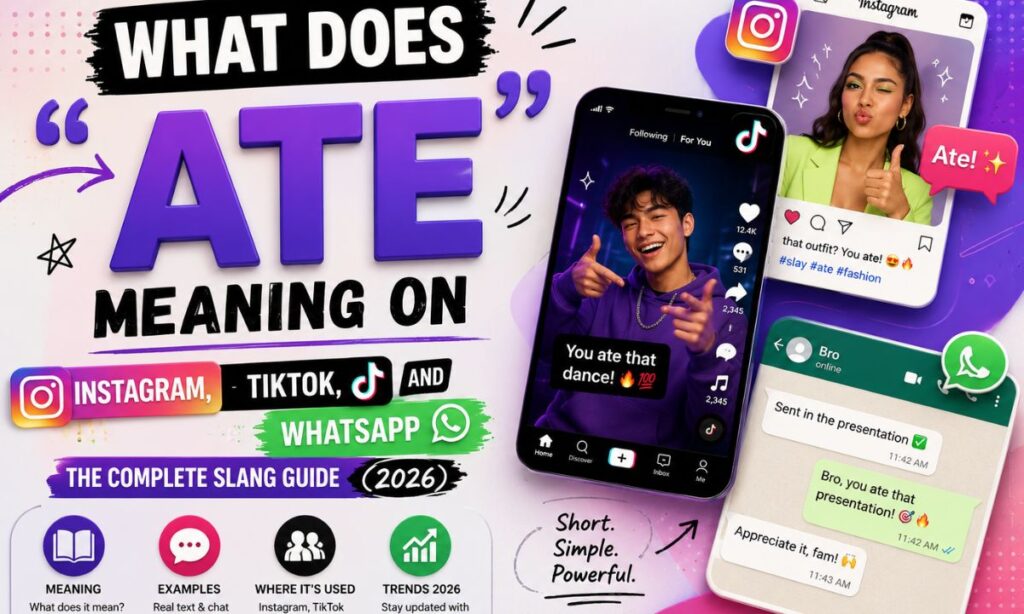
Across Instagram, TikTok, and WhatsApp, “ate” keeps its core meaning but adapts slightly to each platform’s culture.
- Instagram: Common in comments under photos, reels, and stories — often written as “she ATE” or “you ate this.”
- TikTok: Frequently used in video comments to praise a dance, outfit, or comedic timing; sometimes stylized as “ATE AND LEFT NO CRUMBS.”
- WhatsApp: Used more casually in personal chats between friends, often shortened even further or paired with voice-note reactions.
The meaning stays consistent, but the tone shifts — Instagram and TikTok versions tend to be more performative and public, while WhatsApp usage feels closer to private, everyday conversation.
Is “Ate” an Acronym, Short Form, or Something Else?
“Ate” is not an acronym — it’s a repurposed English word used metaphorically. Unlike terms such as “IDK” or “LOL,” it doesn’t stand for anything; it’s simply the past tense of “eat,” reused to mean “excelled” or “dominated.”
This distinction matters because people sometimes assume unfamiliar slang must be an abbreviation. In this case, the word keeps its original spelling and grammar but takes on a completely new figurative meaning, similar to how “slay,” “killed it,” or “ate it up” work in everyday English.
Tone & Context Variations
“Ate” is almost always positive, but its intensity can shift depending on context and delivery.
- Enthusiastic praise: “ATE 😭😭” — maximum excitement, usually about looks or performance.
- Casual approval: “ate ngl” — a lower-key nod, still a compliment but understated.
- Sarcastic or ironic use: Occasionally used jokingly when someone does something mediocre, as exaggerated, tongue-in-cheek praise among close friends.
Reading tone usually depends on punctuation, capitalization, and emojis. All caps and multiple emojis signal genuine hype; lowercase, flat delivery often signals a joke or understatement.
Real Chat Examples (Natural Conversations)
Here’s how “ate” actually shows up in everyday conversation:
- Friend A: “wait did you see her outfit today” Friend B: “she ATE no cap”
- Text after a job interview: “how’d it go??” “I think I ate ngl, they smiled the whole time”
- Comment under a dance video: “you ate this challenge and left no crumbs 🔥”
- Group chat after a presentation: “not gonna lie you ate that meeting”
These examples show the word working across compliments, self-assessment, and public commentary — always signaling success.
Grammar & Language Role
Grammatically, “ate” keeps functioning as a verb, just used figuratively instead of literally. It can appear as a standalone exclamation (“ATE”), as part of a sentence (“you ate that”), or nested inside a longer phrase (“ate and left no crumbs”).
It doesn’t take on noun or adjective forms in standard usage, though some slang variations like “iconic eater” playfully extend the concept. Because it’s used informally, expect inconsistent capitalization and punctuation — that’s part of the style, not a grammar mistake.
How to Reply When Someone Says “You Ate”
The simplest reply is a genuine thank-you, matched to the same casual energy. Good options include:
- “omg thank you 😭”
- “I try 💅”
- “we ate together fr” (if it was a group effort or shared moment)
- A simple fire emoji 🔥 or heart
Overexplaining or responding too formally can feel out of place — the phrase is casual praise, so a short, warm reply usually lands best.
Comparison Table With Similar Slang
| Slang Term | Meaning | Typical Use Case |
| Ate | Did something exceptionally well | Outfits, performances, comebacks |
| Slay | Looked or did great, confidently | Appearance, bold moves |
| Ate and left no crumbs | Did something flawlessly, no mistakes | Performances, full execution |
| Killed it | Succeeded impressively | Work, presentations, events |
| No cap | No lie, being serious | Emphasizing honesty |
While these terms overlap in positivity, “ate” specifically emphasizes total, flawless execution — closer to “killed it” than to general hype words like “slay.”
[Image: Comparison table graphic for quick visual reference]
Who Uses This Term?
“Ate” is most common among Gen Z and younger millennials, particularly in social media comments, group chats, and casual texting. It originated in and remains strongly associated with Black American and LGBTQ+ internet culture, particularly ballroom and drag scenes, before spreading into mainstream youth slang through social media.
Today it’s used broadly across demographics online, though it’s still most natural in casual, peer-to-peer digital conversation rather than formal or professional settings.
Origin & Internet Culture Insight
The phrase traces back to ballroom and drag culture, where performance excellence has long been described in vivid, theatrical language. “Ate” and its fuller form, “ate and left no crumbs,” described a performer who executed so completely that there was nothing left to criticize — as if they’d consumed the entire moment.
[External source: linguistic/cultural history of AAVE and ballroom slang terms]
From there, the phrase moved into Black Twitter and broader social media slang, gradually shortening to just “ate” as it became mainstream. Like many slang terms with cultural roots, it’s worth using respectfully and with awareness of where it comes from.
TikTok Influence
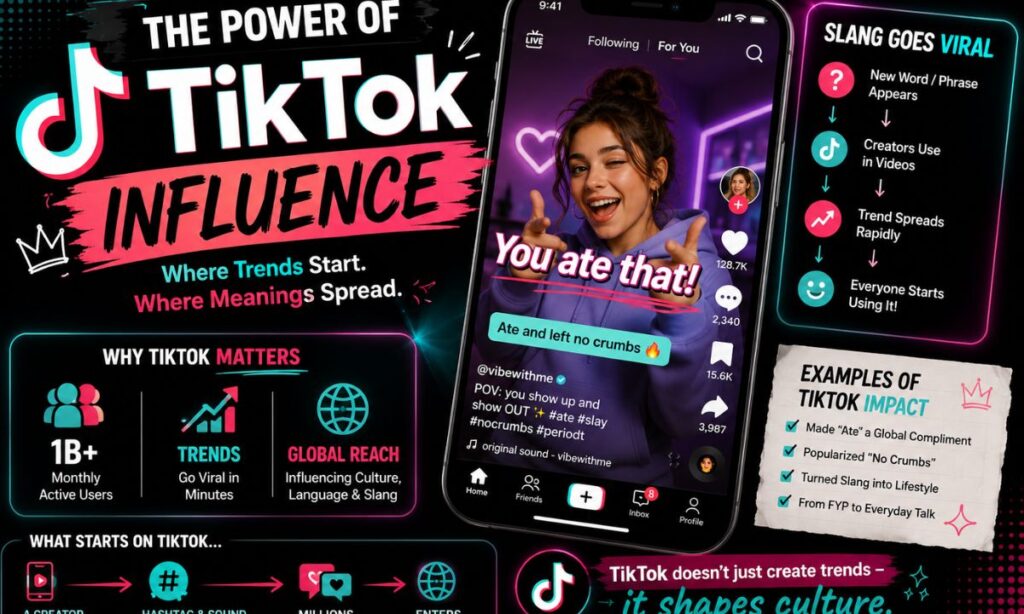
TikTok significantly accelerated how widely “ate” spread. Short-form video comments favor quick, punchy reactions, and “ate” fit perfectly — one word, instantly readable, endlessly reusable across dance videos, transformation clips, and comedic content.
Popular creators using the term in captions and comments helped push it from niche slang into everyday vocabulary for millions of viewers, especially younger users who picked it up directly from trending videos rather than in-person conversation.
Is “Ate” Rude or Inappropriate?
No, “ate” is not rude — it’s a compliment in virtually all standard usage. There’s no negative or inappropriate connotation attached to the core meaning.
The only nuance is cultural origin awareness: since the term comes from Black and LGBTQ+ ballroom culture, some people prefer to be mindful about using it outside casual peer contexts, similar to other slang with specific cultural roots. Used normally in a text or comment, though, it reads as warm and enthusiastic, not offensive.
Experience-Based Insight
Anyone who spends time in group chats or comment sections has likely seen “ate” used dozens of times without a second thought — that’s part of why it can feel confusing to someone encountering it for the first time.
In practice, native users rarely define it; they just drop it as an instinctive reaction, the same way someone might say “nice” or “wow.” The best way to get comfortable with the term is simply seeing it in context repeatedly, which naturally builds intuition for tone and timing.
Ate meaning in chat from a girl
When a girl uses “ate” in a chat, the meaning doesn’t change based on gender — it still signals genuine praise for doing something impressively well, whether that’s an outfit, a post, or a moment. What can shift is emphasis:
it’s commonly used between friends hyping each other up, especially around appearance, confidence, or a bold decision, making it a common phrase in supportive, affirming friendships.
Ate slang synonym
Close synonyms include “slayed,” “killed it,” “nailed it,” and “ate and left no crumbs.” Each carries a slightly different flavor: “slay” leans toward confidence and style, “killed it” leans toward skill or effort, while “ate” specifically implies flawless, complete execution — nothing left to improve.
Ate mean in slang urban dictionary
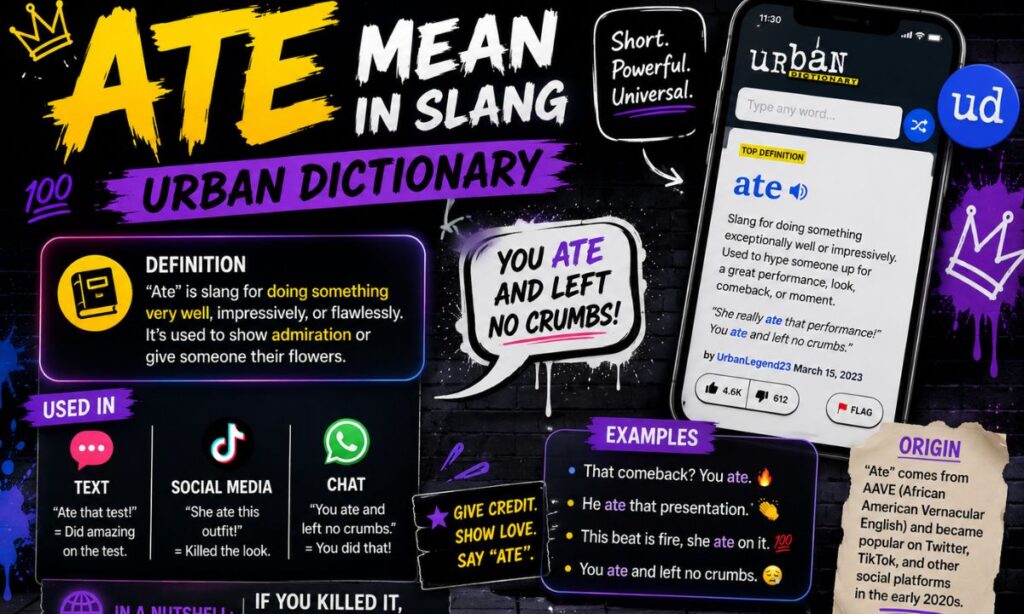
Urban Dictionary entries for “ate” generally define it as excelling at something so thoroughly that the performance or moment was fully “consumed” — a playful way of saying someone did the absolute most, in the best way.
Definitions there echo the same meaning used across social platforms: total success, delivered with style.
What does ate mean in Filipino
In Filipino, “ate” (pronounced ah-teh) is an entirely different, unrelated word meaning “older sister,” used both for biological sisters and as a respectful term for older female relatives, friends, or even service staff.
It’s important not to confuse this with the English slang “ate” (pronounced like the past tense of “eat”) — the spelling is identical, but the pronunciation, origin, and meaning are completely different.
Frequently Asked Questions
What does “ate” mean in text?
In text, “ate” means someone did something impressively well, like nailing an outfit, performance, or moment. It’s used as a quick, enthusiastic compliment rather than a literal reference to food.
Is “ate” rude?
No, “ate” is not rude — it’s a compliment. The main thing to be aware of is its cultural origin in Black and LGBTQ+ ballroom slang, which is worth using respectfully.
What does “ate” mean on Snapchat?
On Snapchat, “ate” means the same thing as elsewhere: praise for doing something exceptionally well, usually in response to a snap, photo, or bold moment shared in chat.
Is “ate” the same as IDK?
No, they’re unrelated. “IDK” means “I don’t know,” while “ate” is a compliment meaning someone excelled at something. They serve completely different purposes in conversation.
Can adults use the slang “ate”?
Yes, anyone can use “ate” — it’s not age-restricted, though it’s most common among Gen Z and younger millennials in casual digital conversations.
How do you respond to “you ate”?
A simple, casual thank-you works best, such as “omg thank you,” a fire emoji, or “I try.” Matching the casual tone keeps the reply natural.
What does “ate and left no crumbs” mean?
This full phrase means someone did something so completely and flawlessly that there was nothing left to critique — the origin of the shorter, modern “ate.”
Where did the word “ate” come from?
Ate” originated in Black and LGBTQ+ ballroom culture from the longer phrase “ate and left no crumbs.” It later spread through social media into mainstream Gen Z slang.
Does “ate” mean the same thing in every context?
Yes, “ate” almost always means someone did something exceptionally well, regardless of platform. Only tone and intensity shift depending on capitalization, emojis, and the conversation.
Is “ate” only used for looks and outfits?
No, “ate” applies to any impressive performance — outfits, presentations, dance videos, comebacks, or even test scores. Anything done flawlessly can be described as “ate.”
What’s the difference between “ate” and “ate it up”?
Ate” typically describes flawless execution of one specific moment or look. “Ate it up” often implies enjoying or embracing something fully, with slightly more emphasis on enthusiasm than perfection.
Is “ate” appropriate to use in professional settings?
No, “ate” is casual internet slang best suited for texts, comments, and social media. It’s not appropriate for formal writing, emails, or professional conversations.
Conclusion
So, what does “ate” mean? At its heart, it’s one of the simplest compliments in modern internet slang: you did something so well, there’s nothing left to add. Whether it shows up in a text, a Snapchat reply, or a TikTok comment, the meaning stays the same — genuine, enthusiastic praise for a job well done.
Next time it lands in your inbox, you’ll know exactly what it means, where it comes from, and exactly how to reply.